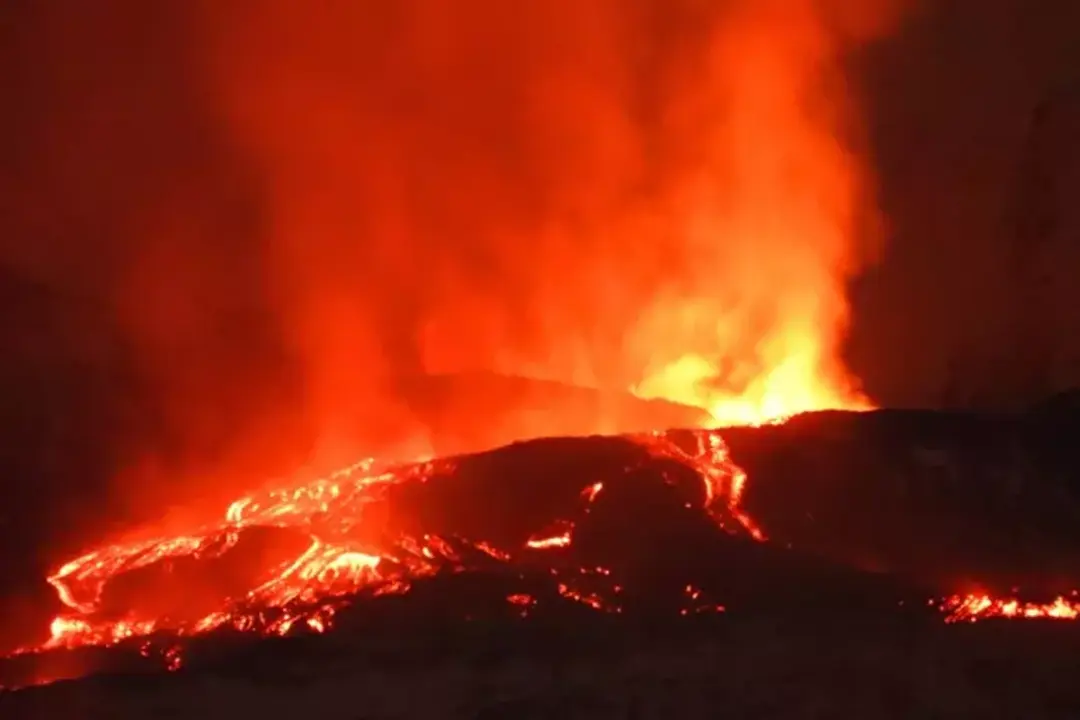
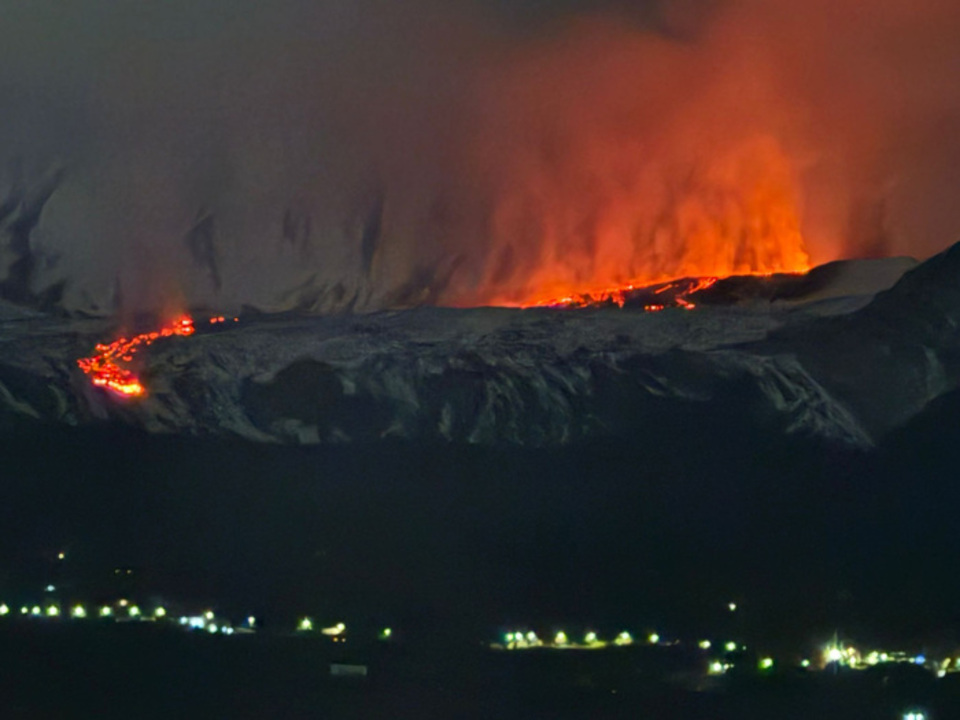
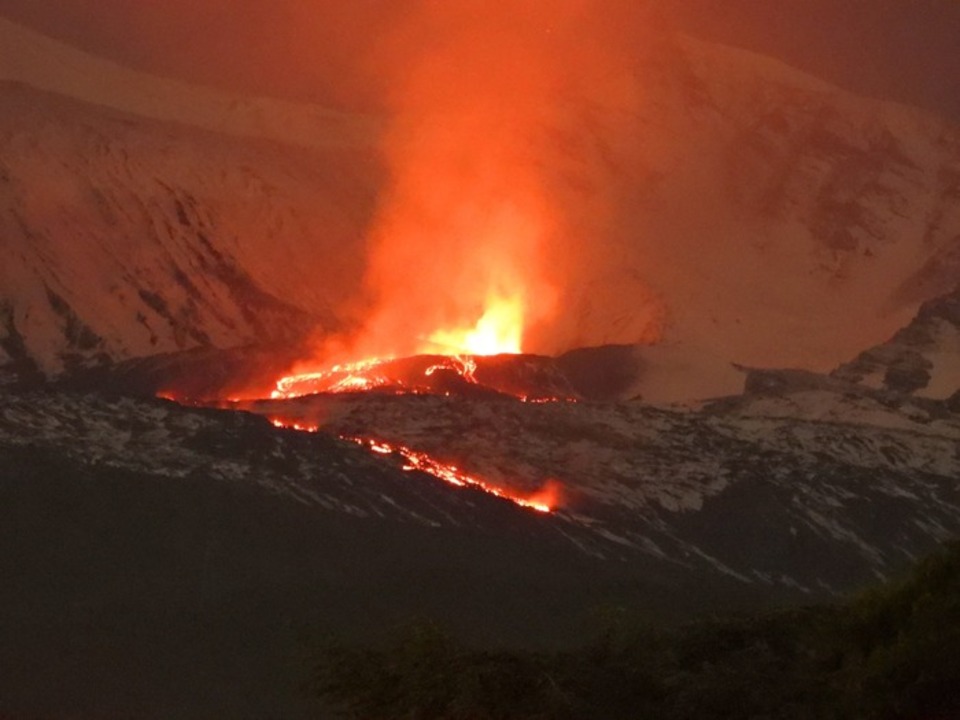
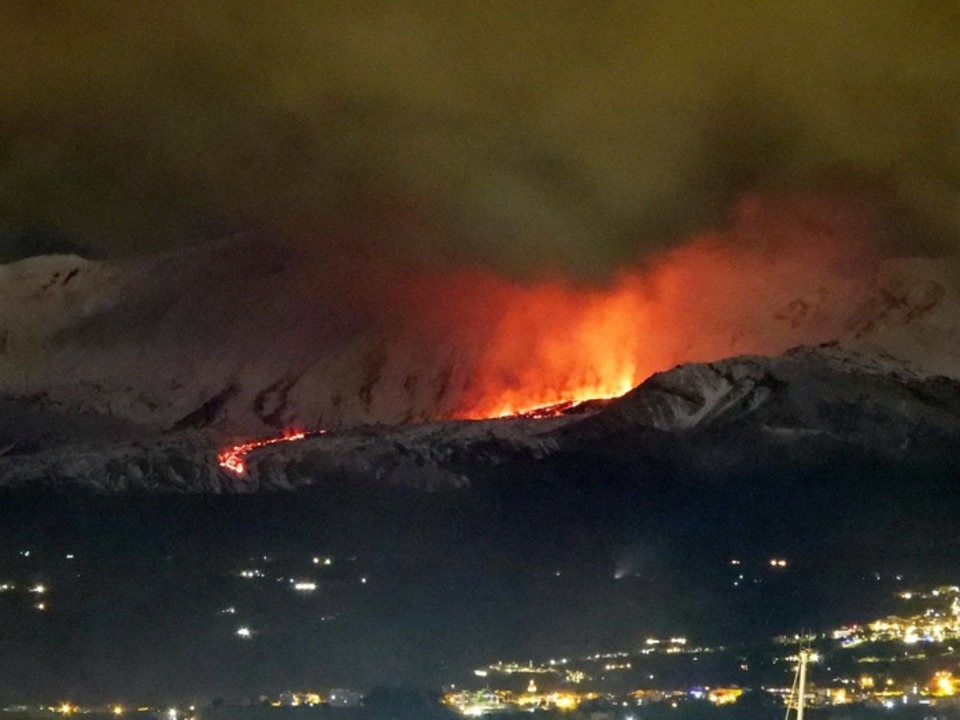
Europe's tallest active volcano Etna has begun to spew lava in a fresh eruption that is in a deserted spot on its upper slopes and thus poses no danger to the villages lying in its lee, volcanologists said Friday.
"Around midnight on this New Year's Eve, January 1, 2026, satellite thermal sensors began measuring heat anomalies near Etna, and in the morning, satellite images showed a new lava flow forming in the upper Valle del Bove, below the Serracozzo ridge.
An eruptive fracture with several vents was activated near the Monte Simone cone, a witness to an eruption in 1811-1812," said volcanologist Boris Behncke of the INGV-OE in Catania, describing on Facebook the formation of the effusive vent in Etna's desert-like Valle del Bove, near Monte Simone, at approximately 2,100 meters.
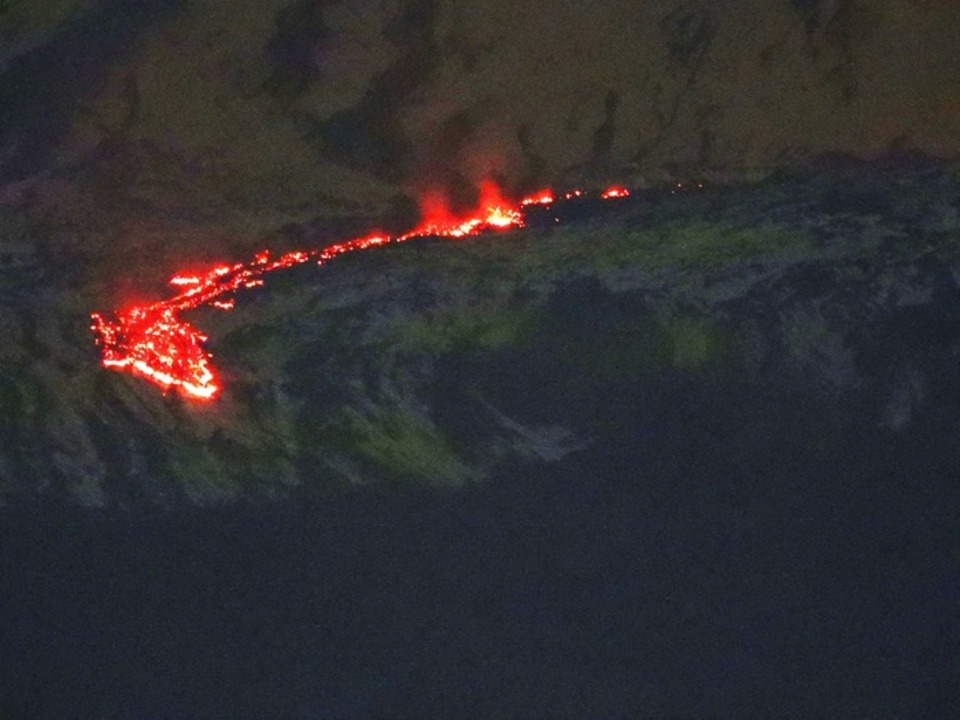
From this vent, a lava flow emerged, its front reaching an altitude of 1,580 meters.
"This is how this silent lateral eruption began," adds Boris Behncke on his social media account, "which is fueling a truly spectacular lava flow, which, seen from the lower eastern slope of Etna, appears incredibly low and close to the villages (which would be Milo and Fornazzo).
Fortunately, this isn't the case for now.
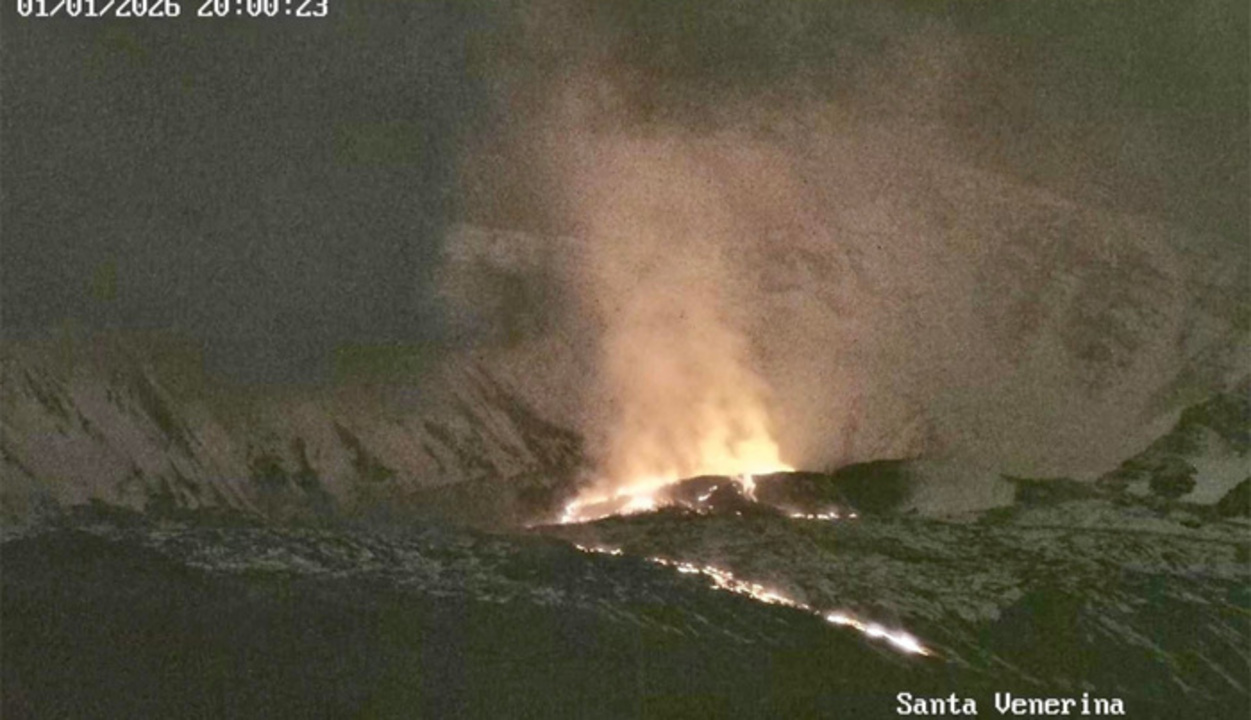
From the most advanced front, Fornazzo is about 5 km away and Milo 5.5 km, distances that aren't easily surmountable once a lava flow has already made its way upstream." "The start of the eruption," explains the volcanologist from the INGV-OE in Catania, "was not seen by the Etna residents nor by cameras, both INGV and private, because the eastern flank was shrouded in dense cloud cover.
"Only at dusk was a strong glow evident in the images from some webcams, including the INGV's on Vulcano! "Among the flood of spectacular photos and videos that have been flooding social media for hours now, these images of mine certainly aren't much to look at, but they are those taken with the eye of a volcanologist searching for reference points and to determine if there was explosive activity at the vents: in fact, at least two vents are spattering, launching shreds of incandescent lava to heights of a few dozen meters." "Once again," emphasizes Boris Behncke, "Etna surprised us; the volcanic tremor was fading, and signs of explosive activity at the summit craters were increasingly less evident (aside from a few puffs of ash from the Bocca Nuova and Northeast craters during the day).
"This dramatic turn of events came just a few days after the paroxysms at the Northeast crater on December 27th... but what an incredible volcano we have here."
ALL RIGHTS RESERVED © Copyright ANSA