Lisbon, Sept. 9, 2026 (Lusa) - The minister for the environment and energy argued on Wednesday that the Portuguese State's stake in the electricity and gas grid managing company, REN, strengthens the ability to defend the public interest in a strategic company, and said that this was the news she was most pleased to share with the Portuguese people.
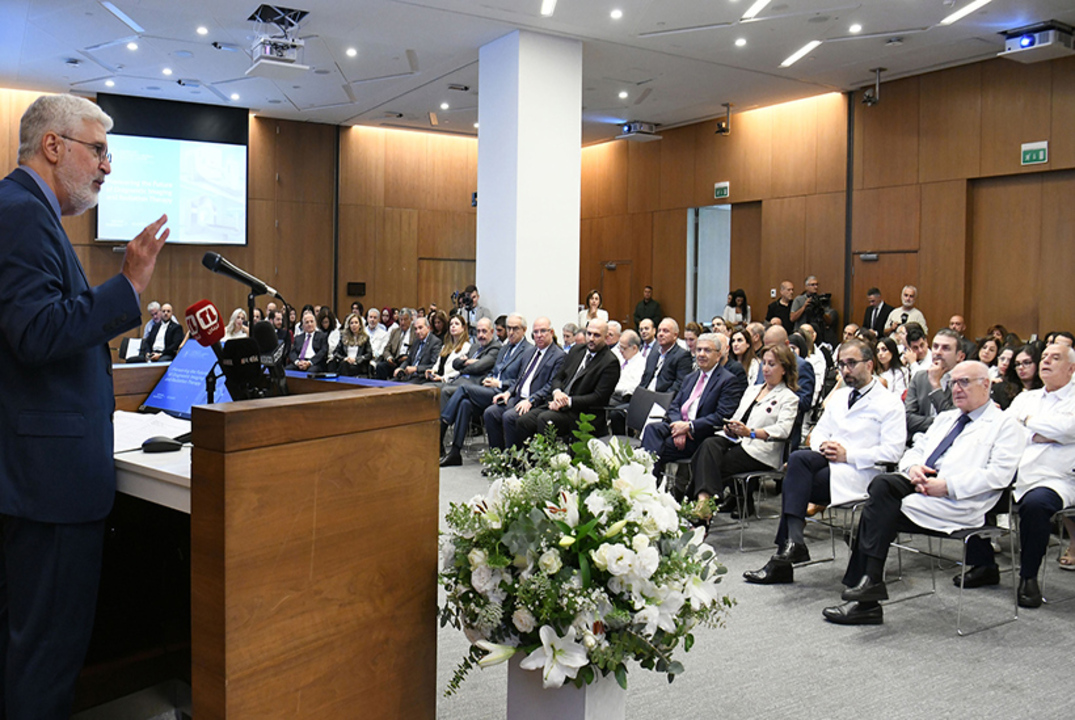
«It is yet another tool for defending the public interest in a company that is essential to our Portuguese energy system,» said Maria da Graça Carvalho, during a hearing before the Committee on the Environment and Energy.
The minister explained that the state's 13.7% stake in REN – Redes Energéticas Nacionais – allows the state to exert additional influence over a company responsible for the transmission of electricity and the transmission and storage of gas, in addition to the instruments it already has at its disposal through network planning and independent regulation.
«Therefore, it is about increasing the State's capacity to exert influence from within, because we were already able to exert influence from the outside,» she said.
She reiterated that the decision is essentially based on considerations of sovereignty, public interest and national security – including cyber security – and added a geopolitical dimension to the justification for the operation.
«It is also a geopolitical issue,» she said.
When asked about the fact that REN's largest shareholder is State Grid, a Chinese state-owned company, the minister said that so far there have been no problems in that relationship.
«I would like to say that so far we have not had any problems with that and we have a good working relationship based on dialogue,» she said.
The minister noted, however, that developments in the international context justify greater state attention to the control of assets considered strategic, particularly when shareholders from countries outside the European Union are involved.
«Friends who cease to be friends and who pose threats. Therefore, it is of the utmost importance that we control what is strategic,» she said.
She identified electricity grids, gas distribution and storage, and oil refining as strategic areas and emphasised that there is European and national legislation allowing action to be taken on grounds of sovereignty and security.
The minister also rejected the suggestion that the acquisition of a 13.7% stake in REN was the result of a hasty decision, stating that the matter had been under consideration since the Government took office in 2024.
«It was ‘duly prepared, with many scenarios mapped out', and therefore it was not something which, as some media outlets – perhaps because not all of this had been explained – claimed had been a hasty decision,» she said.
According to the minister, the stake in REN was also one of the main topics discussed during Prime Minister Luís Montenegro's trip to China, in which she took part, having remained in the country for a few more days «precisely to address this issue».
With the transaction, agreed on 14 August with Pontegadea Inversiones – the investment company of Amancio Ortega, founder of Inditex – the State re-entered REN's share capital, from which it had withdrawn in 2014, and became the second-largest shareholder, behind the Chinese firm State Grid, which holds 25%.
The value of the transaction, carried out through Parpública, the body managing the State's shareholdings, was not disclosed, although the Jornal Económico newspaper reported in August that the figure was around €380 million.
When asked about the purchase price, Maria da Graça Carvalho referred the financial details of the transaction to the minister of finance, explaining that her work had focused on scenarios relating to the energy sector.
«And so, I think that this news, although it has been criticised, is the news I most enjoyed sharing with the Portuguese people,» she said.
«I am very proud to be part of a government that broke this news to the Portuguese people and had the courage to do so. It wasn't easy,» she added.
SCR/AYLS // AYLS
Lusa