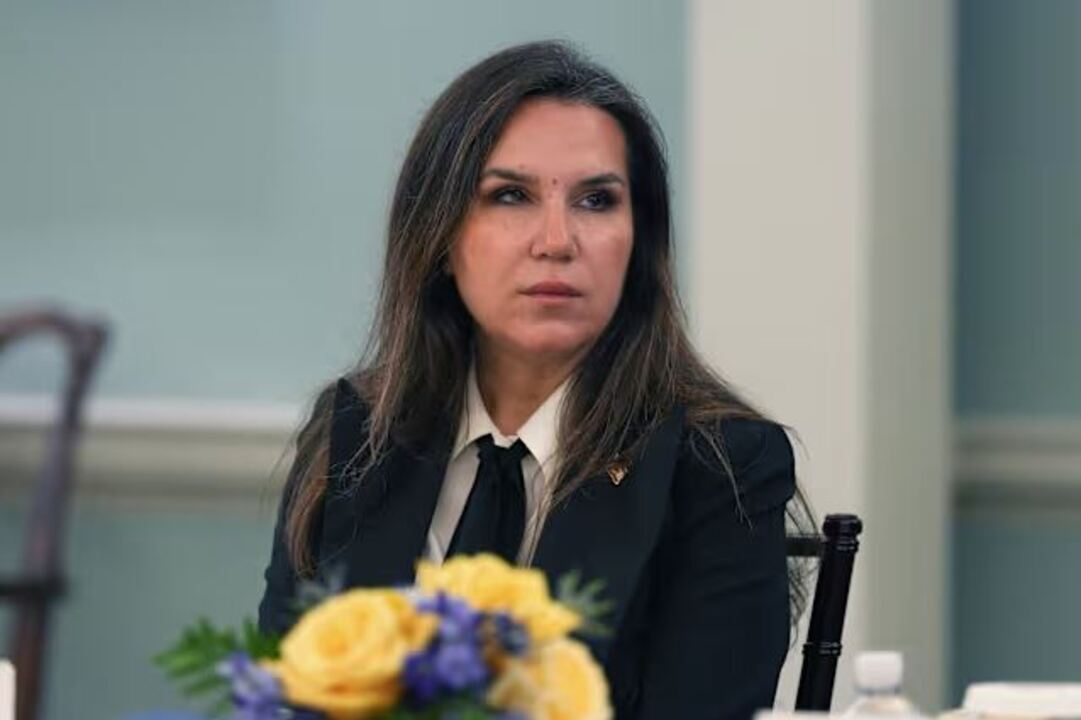
Lisbon, April 24, 2026 (Lusa) – The Minister of Environment and Energy argued on Friday that the Sines refinery is "essential" for Portugal, saying that the government’s role is to help make it "more competitive."
Maria da Graça Carvalho was addressing the PCP (Communist) party concerns regarding the potential risk of the refinery falling under Spanish ownership following a merger of certain Galp and Moeve assets. During a sectoral debate in parliament, she said that the government considers the "presence of Sines essential."
"This crisis shows how important it is to have a refinery on Portuguese soil," she said, referring to the energy crisis caused by the Middle East conflict and the infrastructure's strategic role.
She said, however, that the government's only course of action is "to help make the refinery more competitive." She said that national ownership does not prevent a facility from closing, citing the Matosinhos refinery as an example. According to Carvalho, supporting competitiveness involves ensuring "the right legislation" and "the right incentives", such as measures to increase operational capacity.
The discussion centres on a non-binding agreement between Galp and Moeve (formerly Cepsa) shareholders to discuss merging their downstream portfolios on the Iberian Peninsula. The plan under study involves creating two new business platforms: one dedicated to fuel retail and mobility, and another industrial platform focused on refining, petrochemicals, trading, and low-carbon fuels like biofuels and hydrogen.
Galp is expected to hold a minority stake of over 20% in the industrial platform, while Moeve shareholders will retain the majority. The Sines refinery, considered strategic for Portugal's energy supply, is among the assets potentially included in the deal.
During the same debate, she faced questions about large energy companies' profits and the possibility of price intervention. "Regarding the profits of the companies mentioned, as previously explained and reported in the media, a large part of these profits is not obtained in Portugal," she said.
The European Commission said this week that European Union countries may introduce windfall taxes on energy companies' profits, although it considered adopting such a measure at the European level difficult.
Maria da Graça Carvalho said that these companies "operate at a global level" and that "a large part of the profits are not obtained in Portugal".
Regarding price fixing, she said that Portugal operates "in a market" and requires European authorisation to move forward with such a measure.
SCR/RYOL // AYLS
Lusa