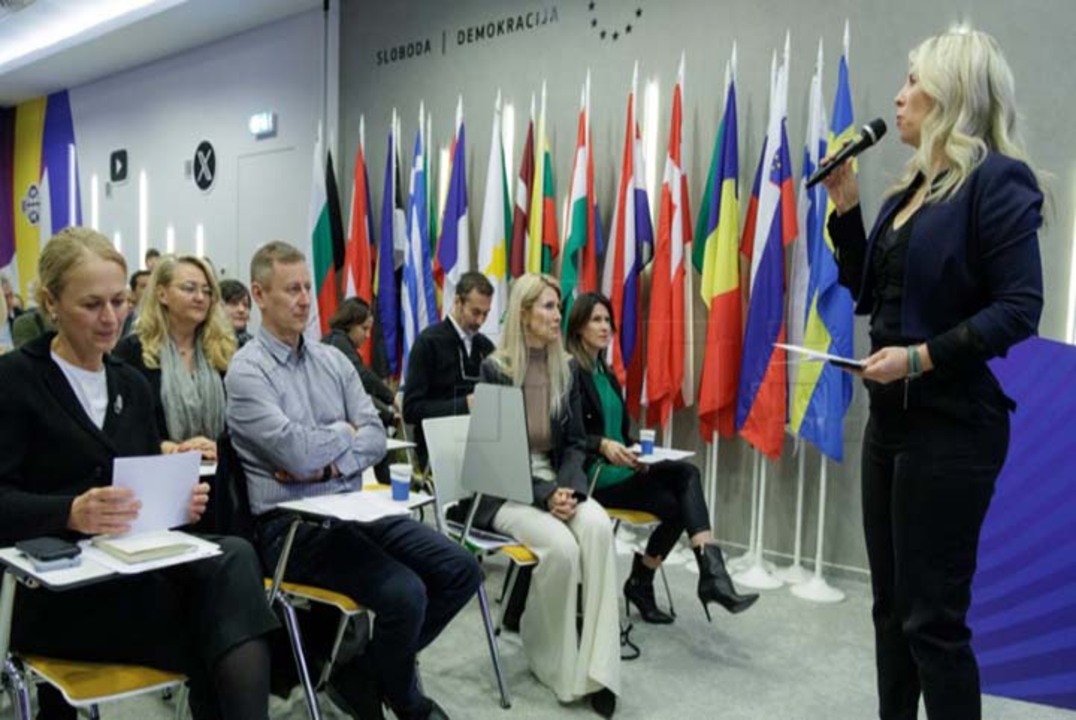
ZAGREB, 3 Feb (Hina) - The Digital Services Act (DSA) is a crucial framework for a safer and fairer online environment, but requires dialogue between media and major online platforms, it was said at a conference on freedom of expression and media responsibility in Zagreb.
Speaking at the conference "Europe and Croatia in the Digital Age: Freedom of Expression and Media Responsibility", Jasna Vaniček-Fila, national coordinator of the Council of Europe's "Journalists Matter" project and a member of the Council for Electronic Media, said digital platforms had radically reshaped the media landscape, which is now almost unrecognisable.
She stressed that, alongside the DSA, the European Media Freedom Act (EMFA) obliges major platforms to communicate with media outlets when content is removed, underlining the shared interest in preventing disinformation and ensuring transparency.
Domagoj Maričić, deputy director of the Croatian Regulatory Authority for Network Industries (HAKOM), said the aim of the event was to familiarise media representatives with the purpose and application of the DSA. He described it as a long-awaited regulation that applies the principle that what is illegal offline should also be illegal online, covering a wide range of violations from hate speech and disinformation to child sexual abuse material and intellectual property infringements.
Maričić outlined several mechanisms for removing illegal content: platform-initiated action based on algorithms and risk assessments; orders from competent Croatian authorities, including the State Attorney's Office, police, Customs Administration, State Inspectorate, Ministry of Health and the Agency for Electronic Media; user requests; and reports from trusted flaggers, who gain that status following notification to HAKOM and adoption of relevant rules. He stressed that HAKOM does not control media content but coordinates competent institutions as national digital services coordinator.
He added that while complaints had been received, no sanctions had been imposed in Croatia, and most complaints concerned major platforms under the European Commission's remit.
European Commission adviser Milana Brkić said the Commission currently has 15 formal proceedings under way against large platforms and has issued more than 150 requests for information. She noted that X had been fined €120 million, while EU users had challenged more than 16 million content removals on Meta and TikTok, with nearly 35% overturned.
Ozren Kronja, executive director of the Croatian Digital Publishers Association (HUDI), highlighted economic imbalances, saying that of €340 million in digital advertising revenue in Croatia, around €240 million goes to Meta and Google, while Croatian publishers receive about €100 million. He called for greater transparency of algorithms, clearer reporting on content moderation and stronger safeguards for media freedom and pluralism.
The discussion and panel were organised by the European Commission, the Agency for Electronic Media and HAKOM, with participation from representatives of the Commission, HAKOM, the State Attorney's Office and the Croatian Journalists' Association.