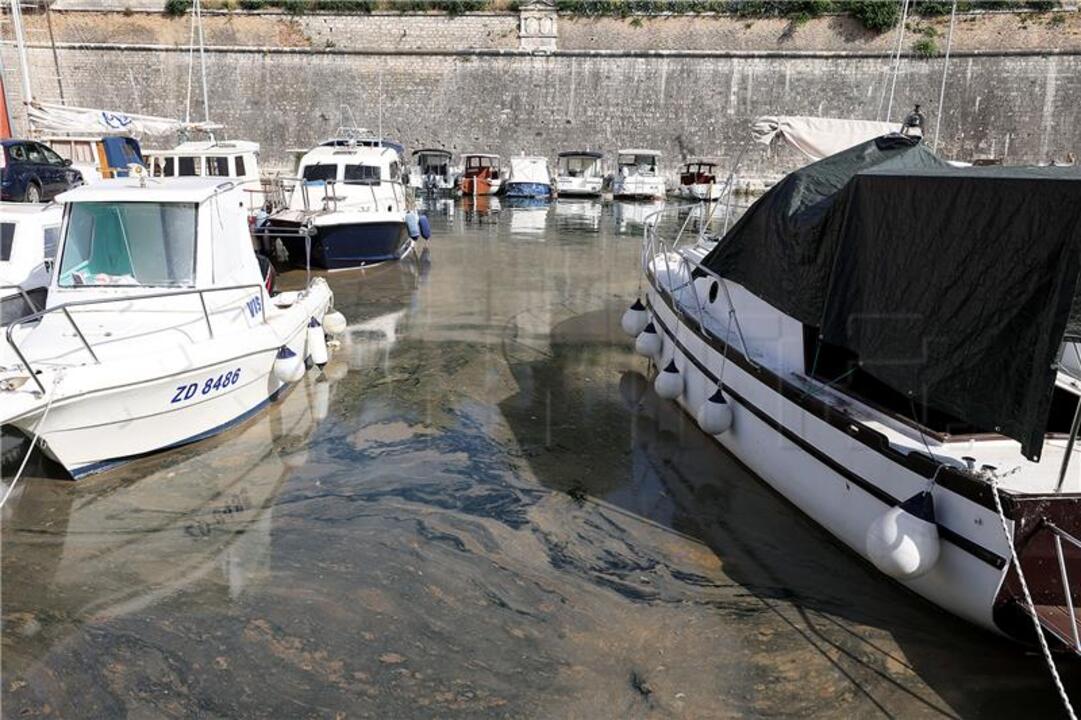
ZAGREB, 25 Jan (Hina) - Croatian scientists have identified the causes of an unprecedented outbreak of sea slime in the northern Adriatic in 2024 -- the most extensive such event recorded in more than 20 years.
The findings of Croatian scientists on the phenomenon of the mass occurrence of marine mucilage in the northern Adriatic were recently published in the renowned journal Scientific Reports (Springer Nature).
The research was conducted by scientists from the Ruđer Bošković Institute’s Center for Marine Research (CIM IRB), in collaboration with the Croatian technology company SeaCras and Algebra Bernays University, combining advanced field measurements, sensors, and satellite data analyses, according to a report released on the RBI website.
According to the RBI, the team combined advanced field measurements, in-sea sensors and satellite data analysis.
The researchers provided a detailed explanation of why the event was so severe, identifying the key meteorological and oceanographic conditions that preceded it. They also identified and monitored the abundance and distribution of phytoplankton species involved in the production of sea slime.
"Such events can seriously disrupt marine ecosystems and directly affect coastal communities, from tourism and fisheries to overall quality of life, so understanding their causes is essential for timely warning and adaptation," the scientists emphasize.
Significant impact on marine ecosystem
Although phytoplankton blooms are a natural and seasonal phenomenon, changes in environmental conditions-- such as rising sea temperatures, reduced water circulation, and increased inflows of freshwater and nutrients-- can lead to abnormal accumulations of sea slime.
The researchers explained that such events have a significant impact not only on marine ecosystems but also on human activities, including tourism, fisheries, maritime transport and recreation.
The results showed that every phase of large-scale sea slime formation in 2024 was directly linked to exceptionally intense phytoplankton blooms, which played a key role in the creation and development of the slime.
At the same time, species diversity within the slime aggregates was lower than in typical seasonal blooms.
"The study further demonstrated that mucilage formation was closely associated with rising sea temperature and sudden drops in salinity caused by increased freshwater inflow, especially from the Po River, creating environmental conditions conducive to mucilage development and accumulation," the RBI reported.
"The mucilage aggregates themselves, connected into larger structures, ranged from elongated formations more than 20 kilometres long to locally migrating patches smaller than 20 metres."
Combination of different technologies and high-frequency measurements
The researchers emphasised that the particular value of the study lies in its combination of different technologies and high-frequency measurements.
CIM IRB scientists used ODAS oceanographic buoys located about 4 nautical miles off Rovinj, which continuously record physical and biological sea parameters, as well as advanced flow cytometric analyses that reveal how plankton community composition changes.
SeaCras complemented the field measurements with its own AI based analyses of high spatial resolution satellite imagery, enabling more precise monitoring of the event’s spatial spread and dynamics.
"This level of temporal and spatial resolution allowed us, for the first time, to fully link changes in environmental conditions with the behaviour of plankton communities and the emergence of marine mucilage. This is a key step forward in understanding this complex phenomenon," Dr Daniela Marić Pfannkuchen, Senior Research Associate at the Ruđer Bošković Institute’s Center for Marine Research in Rovinj and the paper’s corresponding author, was quoted as saying.