Macau, China, Dec. 17, 2025 (Lusa) - A European-funded project used artificial intelligence (AI) and robotics to piece together thousands of fragments from two frescoes in Pompeii, a researcher from the Instituto Superior Técnico (IST) told Lusa.
Nuno Ferreira Duarte said that the four-year project started with the "thousands of pieces" of frescoes from the Roman city of Pompeii that archaeologists had discovered.
"The problem is that there are many of them that we don't know how to reconstruct. People have been trying to solve these puzzles for centuries. They have managed to solve some, but not all," explained the robotics expert.
The project sought to "develop models" of AI that replicate the techniques used by archaeologists to piece together the fragments of the frescoes, "but looking at the thousands of pieces that are there," said Duarte.
Instead of replacing humans, the researcher stressed, the goal is to help them by "automating some mechanisms, which are repetitive and monotonous," to do "meticulous, laborious and time-consuming work."
The project, which received €3.52 million in funding from the European Union (EU), managed to "build some puzzles, in this case still on a small scale," acknowledged Duarte.
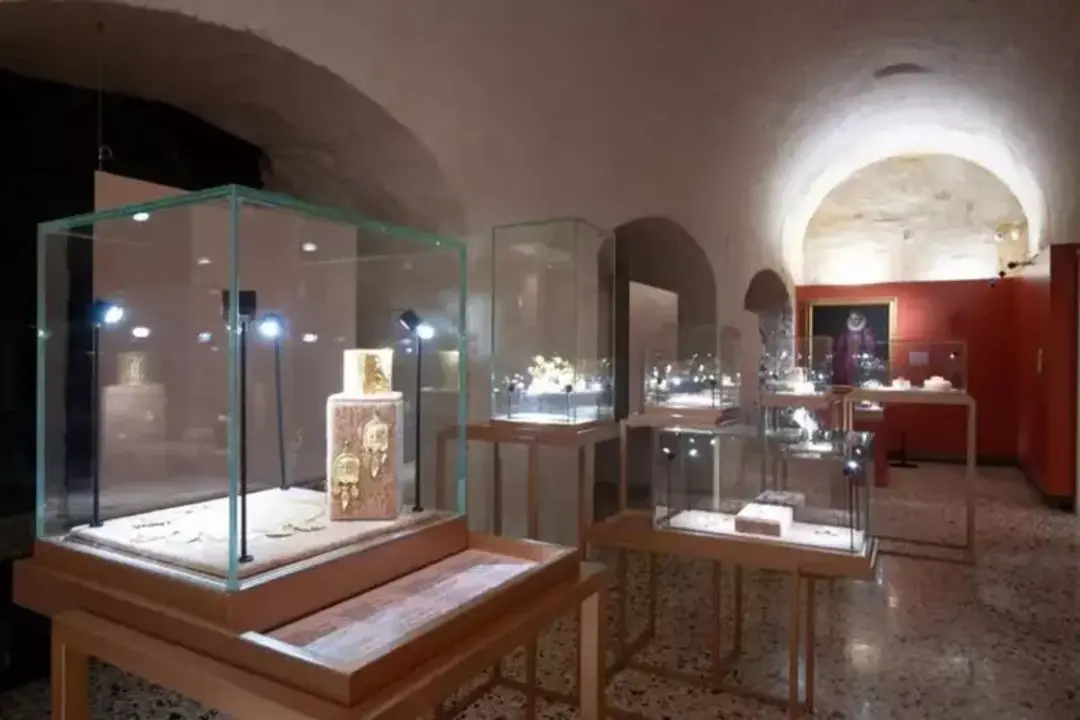
According to the EU, the RePAIR project, which stands for "Reconstructing the Past: Artificial Intelligence and Robotics," restored two frescoes that "were in thousands of broken pieces and in warehouses."
Archaeologists estimate that 15% to 20% of Pompeii's population died during the eruption of Mount Vesuvius in 79 AD, mainly due to thermal shock from the gigantic cloud of gas and ash that enveloped the city.
Volcanic ash buried Pompeii, preserving houses, public buildings, artefacts, and even the residents of the Roman city until its discovery in the late 16th century.
Duarte, a researcher at the Institute of Systems and Robotics, which is part of IST, spoke to Lusa in Macau, where he was presenting the project at an international conference.
The project, coordinated by Ca' Foscari University of Venice (Italy), brought together the Italian Institute of Technology, Ben-Gurion University of the Negev (Israel), the University of Bonn (Germany), IST and the Archaeological Park of Pompeii.
The robotics expert said that IST helped develop the two "hands", each of a different size, that the robot, suspended from the ceiling of one of Pompeii's warehouses, used to handle the fragile fresco fragments.
The project ended in late October, but Duarte said that "the feedback is very positive" and that, in the institutions involved, "everyone is very interested" in seeking new funding to continue the initiative.
"The idea is to have the robot try to solve the most difficult puzzles, while humans focus on those that would be of greatest interest to the public or those with pieces that are too small," explained the researcher.
But Duarte acknowledged that "at this point, it is still too early to imagine any robot currently being able to manipulate the fragments without supervision."
"Further development" of the technology is still needed to allow the system to "be aware of the force" applied to pieces which may be fragile, and "to understand if the pieces are slipping or if they are touching the paint," said the expert.
Duarte also argued that an AI and robotics solution that works in Pompeii could be applied in a "fairly cross-cutting" way at archaeological sites elsewhere.
VQ/ADB // ADB.
Lusa