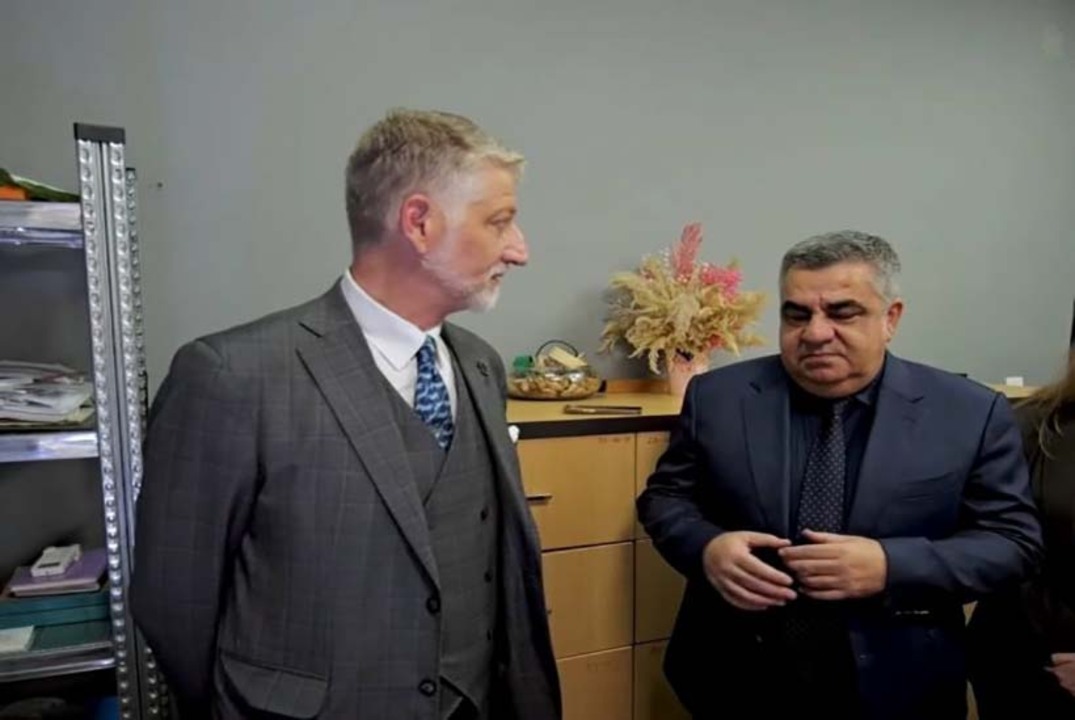
Lisbon, Dec. 1, 2025 (Lusa) - The director of Machine Learning Core at the National Institute of Mental Health (NIMH) said in an interview with Lusa that technology can help researchers understand why one patient is different from another.
Francisco Pereira was one of the speakers at the Responsible AI Forum 2025, held in Lisbon on 25 November, where he discussed artificial intelligence (AI) in healthcare.
In depression, as in other cases, "technology can help researchers understand why one patient is different from another, based on data collected about that patient, such as medical history, clinical analyses, and brain images," says the head of the Machine Learning Core department at the National Institute of Mental Health, USA, which is the world's largest funder of mental health research.
"But it's not that we have a way to use this information to predict which medication will help each person; that is still the subject of much research. As we have many types of data on patients, there is hope that we can use this to help personalise treatment for each person," explains Francisco Pereira.
"What we help our colleagues with most is things like trying to quantify aspects of what patients say," he adds.
For example, "we work with colleagues" who "want to help parents communicate better with children who are depressed and undergoing treatment."
In other words, "parents may complain: You're too passive, you don't do anything. And the child says: You don't understand anything that's going on in my head" and colleagues, he adds, "have a sequence of therapeutic steps that work to help parents and children communicate better in this context. They want to understand what is happening as treatment progresses".
The goal "is to help our colleagues better understand what things have to do with the treatment they are undergoing," he adds.
There are several applications for AI tools in healthcare, but "many have never been evaluated in the formal sense of saying: this counts as an alternative treatment, it works better," points out Francisco Pereira.
On the use of AI, "my perspective is that of a scientist who wants to help people who do health research," to help scientists "better understand why a treatment works."
In fact, "our laboratory works on this basis," he said, noting that much of what is done is to take the data that "scientists are able to collect," whether it be questionnaires, MRIs, or something else, and "try to help people make a better model of what they are studying."
"It is very much our group's goal to use machine learning and artificial intelligence or other types of probabilistic, mathematical models so that scientists can ask questions they otherwise couldn't," he says.
When asked what goal he would like to achieve, he is emphatic: "To be able to help our colleagues who study irritability in children to predict what things are most likely to cause them to lose control and become irritated, i.e., shouting, breaking things, among others, in reference to Disruptive Mood Dysregulation Disorder (DMDD).
"It's not about predicting that the child has this, because the problem is obvious, it's more about helping colleagues to be in a position to help parents," because "we have models that can, based on questions asked regularly via the app, predict with some accuracy if there is a higher probability that the child will lose control soon," he explains.
And this can be used to remind parents of the techniques they have learnt from psychologists to deal with this.
When asked what he would like to achieve next year in research, Francisco Pereira says, "to see this clinical trial up and running," as they are still developing the pilot intervention.
"Our group, Machine Learning Core, does data analysis and application projects for more than 40 laboratories at NIMH. We also do our own developments in machine learning and statistics to answer new questions" at the institute and "consulting and training for researchers throughout NIMH."
ALU/ADB // ADB.
Lusa