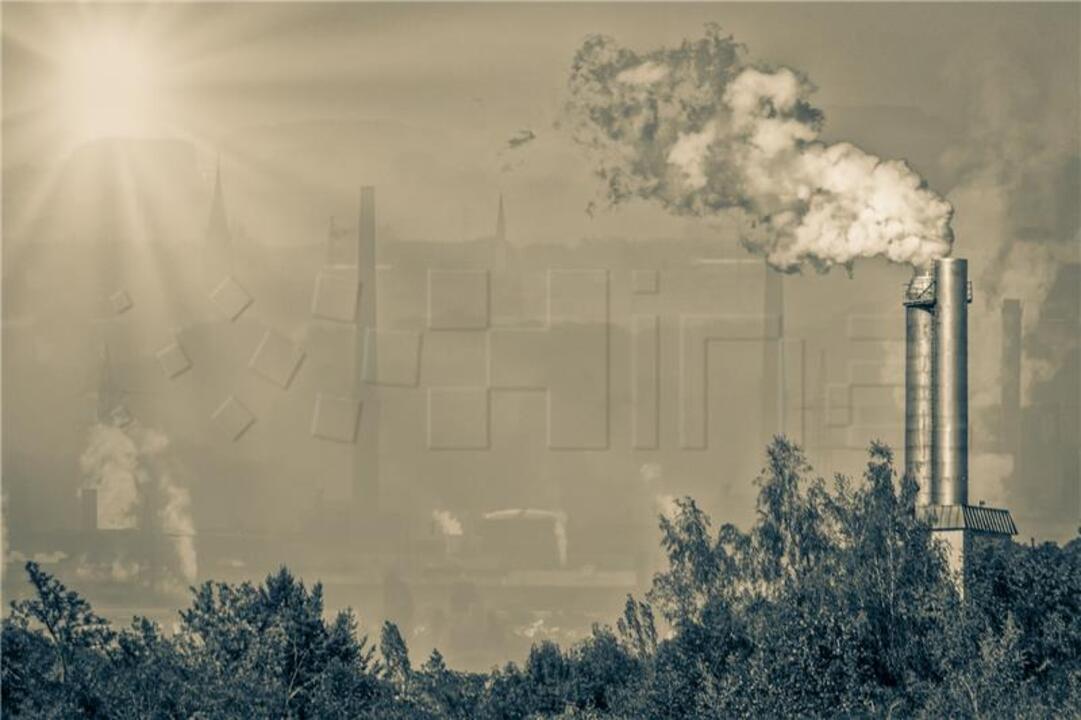
ZAGREB, 28 Jan (Hina) - It is estimated that over 3,500 people in Croatia die prematurely each year due to air pollution caused by airborne particles, with the continental parts being under the greatest pressure during winter, so the Environmental Protection and Green Transition Ministry has launched a €220 million programme.
Aljoša Duplić, director of the Institute for Environmental Protection and Nature at the ministry, has told Hina that air quality is not widely discussed, despite being a major public health issue. "It is estimated that more than 3,500 people in Croatia die prematurely each year due to poor air quality, while across Europe, according to the European Environment Agency, the number reaches around 300,000."
He points out that 96% of Europeans living in cities are exposed to concentrations of airborne particles exceeding the levels recommended by the World Health Organization. "This is a widespread problem that we all need to address to improve air quality."
In Croatia, the cities most affected by air pollution from particulate matter in 2023 were Zagreb, Slavonski Brod, Sisak, and Kutina.
The average age of cars in Croatia is between 13 and 14 years, with a particularly high number of diesel vehicles, Duplić says, adding that in Zagreb, the number of vehicles is continuously increasing, and traffic is one of the main sources of air pollution. "Action needs to be taken."
Germany, for instance, has banned diesel vehicles in many urban areas.
Addressing what individuals can do, Duplić emphasises the importance of avoiding car use for short distances. Establishing an efficient public transport system is crucial, and if it is fast, reliable, and effective, we can significantly reduce pollution and greenhouse gas emissions, he says.
He notes that in the continental parts of Croatia, air quality deteriorates during stable winter weather conditions with no wind. "At such times, the air quality index is poor, very poor, or extremely poor. These exceedances are primarily related to PM10 and PM2.5 particulate matter, which surpasses threshold values and originates from the combustion of solid fuels in household heating, industrial energy production, and vehicle emissions."
When the air quality index is poor, outdoor activities should be reduced, and when it is very poor or extremely poor, they should be avoided, especially by those with health conditions.
Duplić says air quality in a given area is assessed based on continuous annual measurements.
Air of the first category is classified as good, whereas second-category air refers to locations where pollutant levels have exceeded the prescribed limits for extended periods. Cities with second-category air must implement air protection programmes and action plans.
During summer, air pollution is less of an issue due to the absence of heating emissions and lower traffic pollution. However, in coastal areas, particularly in Istria and Dalmatia, ground-level ozone becomes a problem. It forms due to high temperatures and solar radiation interacting with pollutants, primarily nitrogen oxides and volatile organic compounds from traffic.
Croatia's geographical position also places it at a disadvantage compared to some other countries, as it is exposed to cross-border pollution from particulate matter. It is surrounded by several countries with significant industrial pollution, particularly from coal-fired power plants. In several instances last year, Croatia was also affected by Saharan dust, carried by air currents following storms.
€220 million programme
Duplić points out that the nMinistry and the Environmental Protection Fund have launched a programme worth more than €220 million this year to improve air quality. This two-year action plan finances measures to reduce pollution and mitigate climate change, specifically by lowering greenhouse gas emissions.
One of the key components of the programme is funding zero-emission vehicles for taxi services and delivery vehicles, with an allocation of €90 million, of which €45 million will be provided as grants, while the remainder will be in the form of favourable loans.
Additionally, €35 million will be allocated for the replacement of refrigeration units and the purchase of new equipment using substances that do not harm the ozone layer, aiming to eliminate fluorinated greenhouse gases in distribution centres and frozen goods transport.
For the energy renovation of family homes belonging to citizens at risk of energy poverty, €25 million has been secured, while €53 million will be dedicated to purchasing alternative fuel vehicles and expanding the network of electric charging stations.
A further €10 million will be invested in replacing outdated household heating systems in cities where emission levels exceed permissible limits, while another €10 million will be used to subsidise the installation of photovoltaic power plants for citizens.
Duplić emphasises that, in addition to state measures, local government units in areas with problematic air quality are also implementing a series of prescribed activities and measures. "These measures will not completely resolve the issue of poor air quality, but they will certainly contribute to reducing pollution."
He also announced that in two years, new EU air quality directives will come into force, prompting amendments to Croatia’s Air Quality Act. The new regulations will introduce lower threshold values for pollutants, aligning them with the limits set by the WHO.
"This is good news for all of us living in Europe, as it will accelerate efforts to further reduce emissions and, in the long run, improve air quality, which will have a positive impact on our health and quality of life," Duplić sayss.
He adds that air quality in Croatia has significantly improved over the past 40 years, thanks to changes in heating methods, more efficient stoves, better-quality vehicles and fuels, as well as a reduction in industrial and cross-border pollution. However, he stresses that pollution remains an issue and requires ongoing measures.