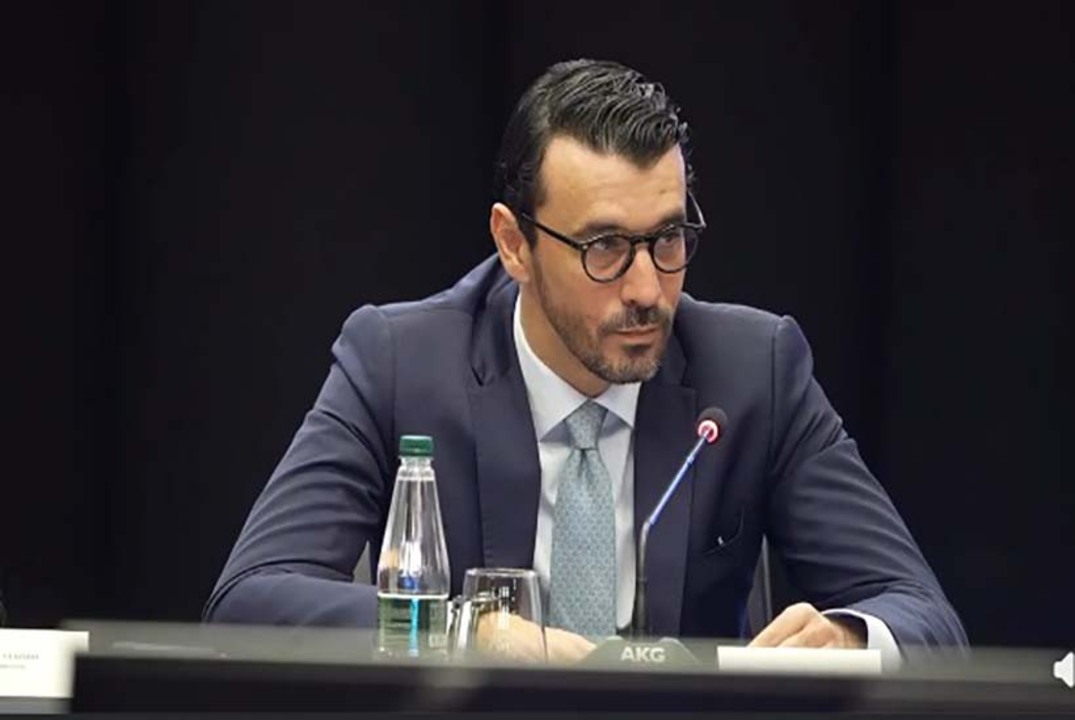
Strasbourg, France, Oct. 7, 2026 (Lusa) - Portuguese MEPs are calling for the European Union to intervene to curb the rising cost of living, but their views differ between selective support (PSD, CDS and IL), price controls (Chega, PCP and BE) and measures to tackle the housing crisis (PS).
Speaking to Lusa, PSD MEP Paulo Cunha argued that, although the Government and the European Commission cannot single-handedly resolve the rise in fuel prices – which was originally triggered by the war in Iran – they can help to alleviate the situation, starting with «sector-specific measures for the most disadvantaged social groups and the most vulnerable economic sectors», such as those being taken by the Portuguese government.
«That is the path we must take, because that is the way we consider fairest to resolve the problem,» he argued.
This position coincides with that put forward by CDS MEP Ana Miguel Pedro, who considered it necessary to provide «more targeted support to families, farmers and businesses» most at risk, whilst emphasising that energy interconnections within the EU must also be strengthened.
«As long as we depend on energy we do not control, we will always be dependent on others,» she warned.
IL MEP João Cotrim Figueiredo also takes the same line as the PSD and CDS: what is needed immediately is a «necessarily temporary response», aimed solely at «those who genuinely need it», although structural measures are required that will not provide a solution in the short term.
«The EU can help [with support], by exempting some of these measures from any additional costs arising from certain European criteria, also on a temporary basis,» he said, speaking out against measures such as price controls, which would benefit everyone.
Conversely, Chega MEP António Tânger Correia believes that the «only thing» the EU can do to address the rising cost of living is precisely to «cap the price» of fuel, adding that this needs to «be done now».
«We must hold talks with both producer and distributor countries, because if fuel prices change, the cost of living changes immediately, as fuel prices have a knock-on effect across the entire economic spectrum of these countries,» he argued.
PS MEP Carla Tavares argued that the European Commission, the European Parliament and the Council of the EU must do «everything in their power» to help countries respond to this situation, emphasising in particular the burden that housing costs place on European citizens, and Portuguese citizens in particular.
«It is important that we begin to consider how we might establish a tripartite ‘task force' involving the EU, national governments and local and regional authorities so that we can overcome this housing crisis,» she said.
Meanwhile, BE MEP Catarina Martins emphasised that «a large part» of the response to the cost of living must be addressed at national level – through measures relating to housing or the setting of electricity prices, similar to what Poland or Spain have already done – but she conceded that the European Commission could strengthen energy interconnections with the Iberian Peninsula or «propose changes to the energy market» to review the method for setting electricity prices.
«When electricity enters our system, we always pay the price of the most expensive energy, even though Portugal produces a great deal of renewable energy at much lower prices. This makes no sense at all; this market system also needs to be addressed», she said.
João Oliveira, of the PCP, also argued that the EU should intervene to ensure that the «price-setting mechanism» is changed, but also provide «political backing» to member states so that they can proceed with «national measures for price control and setting».
These measures, he added, must be accompanied by «policies to increase wages and pensions», which would boost purchasing power, and by incentives to make more homes available in order to bring down housing market prices.
TA/AYLS // AYLS
Lusa