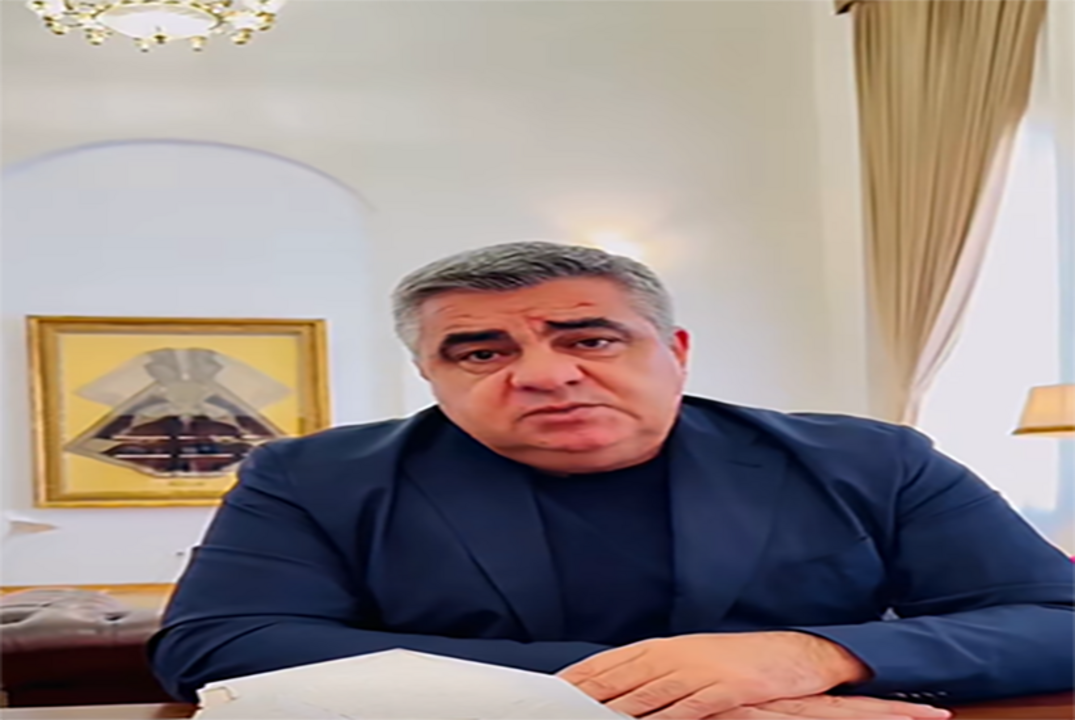
Porto, Aug. 28, 2026 (Lusa) - Urban planner Frederico Moura e Sá told Lusa on Friday that scooters have become an «enemy to be taken out» in Portuguese municipalities, which still have a «deeply motorised urban environment» in which the «city model» remains unchanged.
«I think the biggest challenge is that we always view this in a very narrow, sector-specific way. Are we going to discuss scooters? No, we're not. We're not discussing scooters; we're discussing what public space we have in a city – in other words, we need to discuss what kind of city model we want,» said Moura e Sá, who is also a university lecturer and researcher in the field of urban planning.
In this context, where Portuguese cities have a «deeply motorised urban environment», «the scooter becomes the focus of concern», at a time when several local authorities are phasing out shared mobility services within their areas, citing, amongst other things, safety concerns.
For Frederico Moura e Sá, «bicycles and scooters are not enemies» of urban space, emphasising that safety concerns should focus precisely on those who use non-motorised modes of transport.
«Cycling and scootering in public spaces is still an act of survival» in Portugal, he says, noting that people often attribute responsibility for road traffic accidents to the victim rather than to the car, which is usually involved in accidents with more serious consequences.
The country is also «slow to implement the public space programme that other cities have already carried out with great success», in which «central areas» well served by public transport are more restricted to cars, he believes.
For the Porto-based academic, «the question that remains is: why does a cyclist use the pavement? Why does a scooter user use the pavement? Because the urban environment of our cities in Portugal is, in fact, one of a deeply motorised public space», where it is «unsafe to ride on the streets», and where «the law of the strongest» – the car – prevails.
«Basically, we have a hyper-motorised society. Generally speaking, three out of every four journeys are made by car. This means we have normalised car use. Public space is for cars, full stop,» he explains.
To «break this cycle,» defined by the American author Jane Jacobs as «positive feedback» – «the more space I give to the car, the more cars there will be and, as a result, the more space I have to allocate to the car» – the only way forward is to «reverse the programme» and «rethink the model of the city».
«We are utterly fixated on the idea that public space has a single function: mobility. The first change we must make is to recognise that the primary function of public spaces is social interaction, not mobility», even though we continue «to design streets as if they were roads and channels that serve only one purpose: circulation».
For the urban planner, «a street and a road cannot be the same», highlighting the difference between city models in which, for example, «children can walk to school on their own» or in which «their parents drive them right up to the school gate», or where «older people can go out on their own, because the only space they have to use is the pavement, which is becoming increasingly narrow, patchy, and now has a bicycle or scooter on it as well».
When asked about the removal of scooters in several municipalities, most of which have newly elected mayors following the 2025 elections, he not only challenged the focus on a single mode of transport but also argued that «it is a short-term response to what the majority are demanding».
«But urban policy should be shaped by a long-term, inclusive perspective rather than by electioneering and populism. Urban policy must aim to improve the city», for which «collective goals» should be set through «participatory processes» in which it may even be possible to «reach not a consensus solution», but rather one based on «compromise».
JE/ADB // ADB.
Lusa