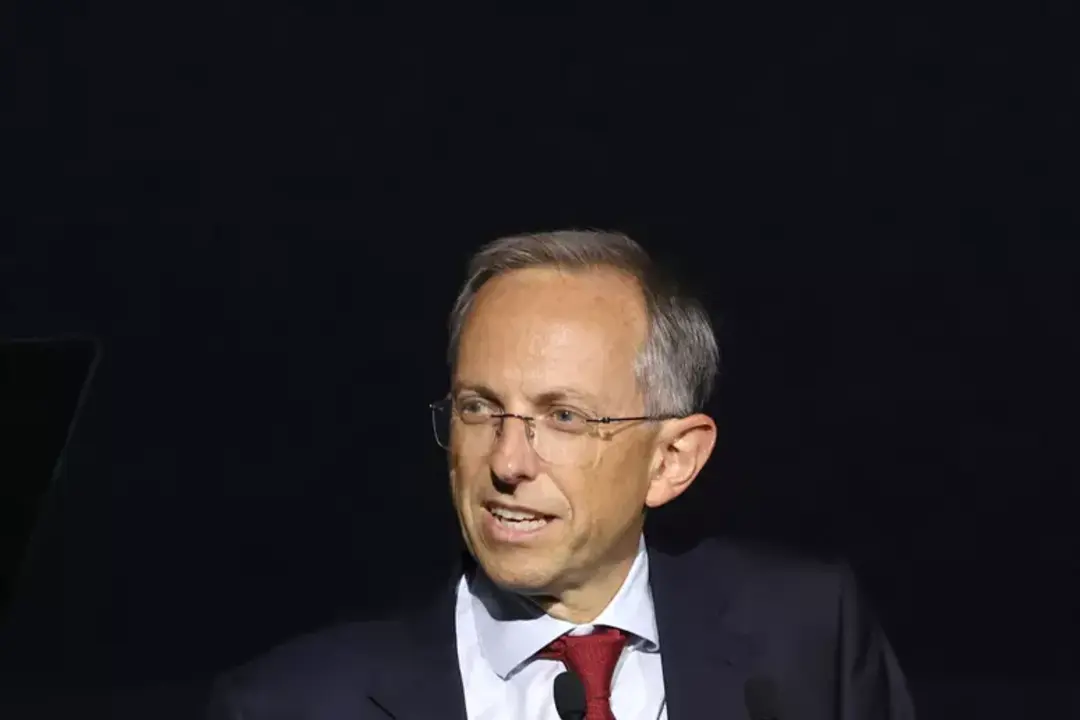
Lisbon, April 15, 2026 (Lusa) – The minister of environment and energy told parliament on Wednesday that Portugal possesses a "system stability and protection mechanism that is far superior to that of Spain”.
During a hearing before the Environment and Energy Committee regarding the blackout of 28 April 2025, Maria da Graça Carvalho based her assessment on a report by ENTSO-E, the European Network of Transmission System Operators for Electricity, which was validated by ACER, the European Union's Agency for the Cooperation of Energy Regulators.
The document confirmed that "the blackout originated in Spain, not in Portugal, and spread to our country and a small region of France," the minister said. She said that the incident stemmed from "a succession of technical failures starting in Spain," linked "essentially to insufficient voltage control."
She said that a key conclusion of the report shows Portugal had implemented protection mechanisms that the Spanish system lacked. "It became very clear in the report, and it is one of the recommendations, that we have a much better system stability and protection mechanism than in Spain,” she stated.
As an example, the minister said that in 2020 Portugal introduced a requirement for all new wind and solar power stations to have “a voltage control mechanism”, a system which, she stated, “Spain did not have”.
“I think this is a major point of protection for us and was a shortcoming in Spain”, because, “particularly with solar power, they did not have this voltage control mechanism in their plants”, she maintained.
She pointed to a difference in the voltage limits applied in the two countries. While the European voltage limit is generally 420 kV, which Portugal follows, Spain benefited from a European Commission derogation allowing it to operate at up to 435 kV. Operating "at the limit", combined with the absence of voltage control mechanisms in solar plants, caused the failure that triggered the blackout, she said.
"This was written between the lines in the ENTSO-E report. In my opinion, this was the real reason, and it is there in the report," she said.
She said that this is one of 23 recommendations in the European report and stated that Portugal has implemented or initiated 90% of them.
Recommendations still requiring reinforcement include the need for increased data sharing, periodic updates to load-shedding plans, and more frequent testing of 'blackstart' systems, which allow power plants to restart without external grid support. She also pointed to greater cooperation with Spain in creating restoration scenarios.
The minister further highlighted a recommendation regarding the autonomy of critical systems, stressing the need to guarantee at least 24 hours of independent operation for essential services. This capacity has been strengthened in hospitals, though she said that "small units are still lacking." She advocated for the same logic in care homes, fire stations, and other rescue and emergency structures.
During the same hearing, the minister rejected the idea that the April blackout resulted from the presence of renewable energy in the electrical system. "This was not a renewables issue; in fact, the problem occurred in Spain, and Spain has operational nuclear power plants," she said.
Nevertheless, she acknowledged that the transformation of the European electrical system, with more self-consumption, energy communities, and distributed production, has made the grid more complex and demanding to manage.
A Technical Advisory Group had been created, and its report "is ready" for publication on 28 April, she said. She reiterated that the aim is to make the system less vulnerable to failures and quicker to recover.
SCR/RYO // AYLS
Lusa