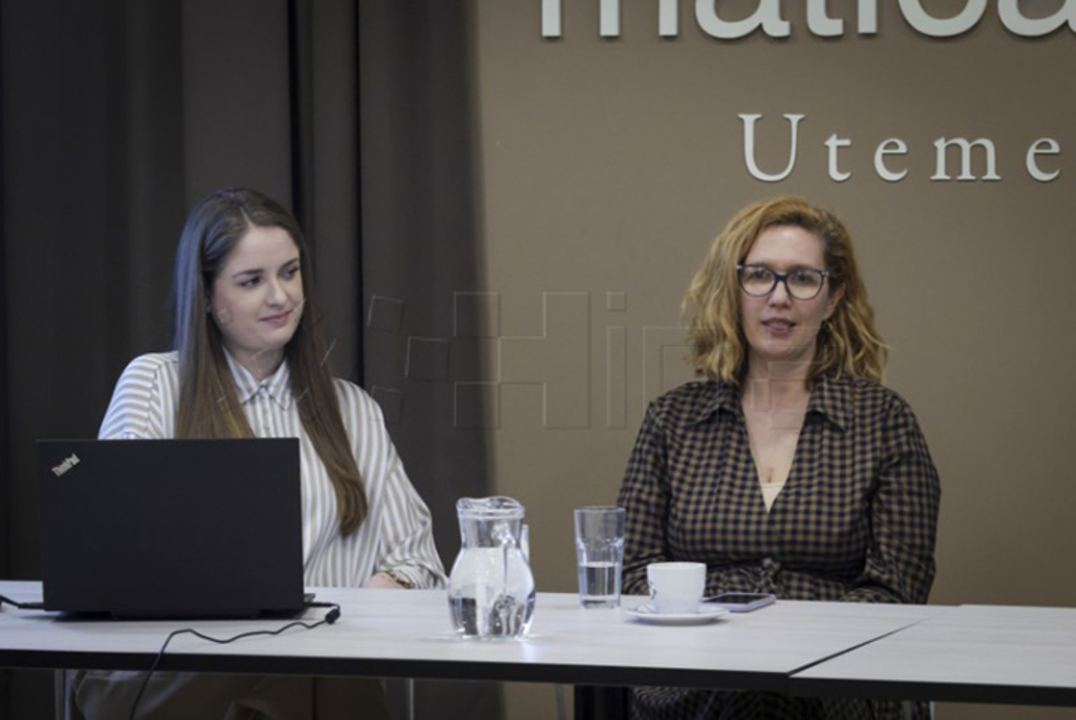
ZAGREB, 26 March (Hina) - A study titled “Croats in Bavaria and Baden-Württemberg: Return or Stay?”, presented on Wednesday by professors Monika Balija and Tamara Bodor from the Department of Demography and Croatian Diaspora at Croatian Studies, highlights trends of return migration to Croatia.
Balija noted that 425,000 Croatian citizens were living in Germany in 2024. The figure includes only those holding Croatian citizenship exclusively, suggesting the total number of people of Croatian origin in Germany is likely significantly higher.
She said there were 220,000 Croatian citizens in Germany in 2010. Between 2022 and 2024, the number declined by 8,000. This decrease cannot be attributed to natural population change, she said, noting that in recent years more Croatian citizens have been born in Germany than have died.
In 2023 and 2024, more Croatian citizens left Germany than moved there, she added. The number of arrivals from Croatia to Germany in 2024 was the lowest since 2011, although it still exceeded the number of those returning to Croatia.
In total, 7,500 people moved from Germany to Croatia in 2024, 80% of whom were Croatian citizens, while just over 8,000 left Croatia for Germany.
Balija said it would be inaccurate to speak of a mass return of Croatian emigrants, though recent trends have become somewhat more favourable for Croatia.
Between 2013 and 2024, 170,000 people emigrated from Croatia to Germany, while 40,000 moved in the opposite direction. Half of all Croatian citizens currently living in Germany arrived over the past decade, she added.
Bodor said the research showed that 35% of newer Croatian emigrants never take part in cultural or social activities of the Croatian community in Germany, 19.7% participate once a year, while 40.7% do so occasionally.
She added that 35% of respondents plan to return to Croatia within one to ten years. Ten percent are already taking steps to return within a year, while 20% do not plan to return, and only 9% of that group occasionally consider doing so.
Among those planning to return, 26% intend to move to eastern Croatia, followed by Dalmatia with 22%, central Croatia with 17%, Zagreb with 14%, and Istria and Kvarner with 10%.
The main motivations for return include a desire to live in the homeland, a more relaxed and peaceful lifestyle, closer proximity to family and social networks, as well as nostalgia and a sense of cultural belonging, Bodor said. A significant share of prospective returnees cited having resolved housing issues in Croatia.
The study also found that emigrants are poorly informed about return measures: 10% consider them entirely inadequate, 13% partly unsuitable, and 13.2% moderately suitable. The researchers said return policies should be made more accessible, as most emigrants believe they cannot benefit from them.
Given that the largest number of Croatian citizens in Germany live in Bavaria and Baden-Württemberg, the study was conducted there on a sample of 634 respondents.
The project, “Croats in Bavaria and Baden-Württemberg: (Re)migration Potential for Croatia”, was funded by the Ministry of Demography and Immigration.