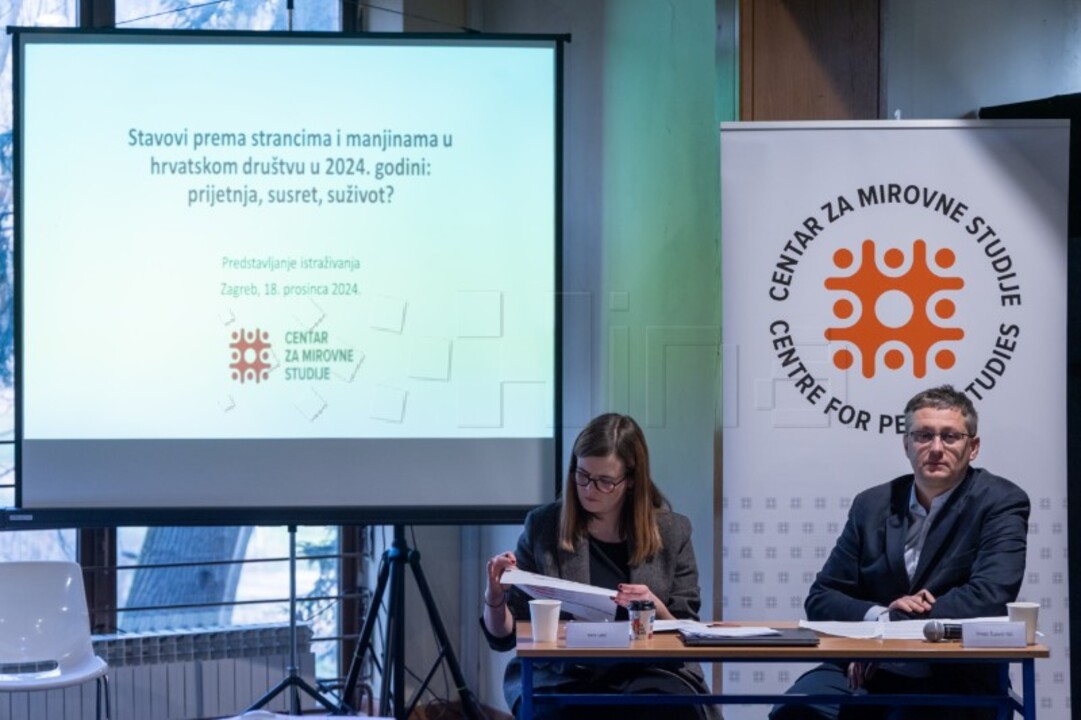
ZAGREB, 20 March (Hina) - Migrants are currently the most vulnerable minority group in Croatia, particularly those working as delivery workers in the gig economy, according to the Centre for Peace Studies (CMS), ahead of its "Week Against Racism" programme running from 20 to 29 March.
The NGO cites protests against migrant workers in Zagreb, Split and Rijeka, bans on entry to clubs and shops based on skin colour or origin and an increase in physical attacks on couriers and other workers as signs of concerning societal trends. It also warns that some political actors are seeking to channel fear and economic dissatisfaction towards migrant workers, and that various forms of violence should not be seen as isolated incidents but as an escalation of intolerance.
The organisation says its assessment is based on its own work with communities and ongoing monitoring of media reports, as official 2025 data are not yet available. Citing the Ombudsperson’s previous reports, CMS notes that intolerance and attacks on migrants are part of a broader, long-term rise in discrimination based on nationality, ethnicity and race.
According to CMS, 362 complaints were recorded in 2023, 90 of which related to race, ethnicity or nationality; in 2024, the share fell to 76 out of 420 complaints (around one fifth). It adds that public opinion surveys also indicate growing negative attitudes towards migrants and minority groups, often framed in terms of security and cultural differences, which contribute to a climate in which violence is more easily normalised.
CMS also points to Ministry of the Interior data showing an increase in foreign nationals among victims of criminal offences in 2024 compared with the previous year. It notes that robberies rose from 855 in 2023 to 1,088 in 2024, while the number of foreign victims nearly tripled from 47 to 138 (around 13% of all victims). Similar trends are seen in cases of serious bodily harm, which increased from 889 in 2023 to 990 in 2024, with foreign victims rising from 77 to 104 (over 10%).
Alongside migrants, Roma remain the most consistently discriminated-against group in Croatia, CMS said.
The organisation argues that recent attacks are not isolated incidents but are enabled by systems and institutions that fail to prevent them or, in some cases, allow them through existing policies and practices.
CMS also highlights a gap between the high number of crimes involving foreign victims and the low number officially classified as hate crimes, suggesting that hate motives are rarely recognised in practice. It calls for greater awareness among police and prosecutors to ensure such offences are properly identified and punished.
Concluding its assessment, CMS says Croatia follows similar trends to other EU countries, including rising intolerance towards migrants, and notes the rapid growth of the migrant workforce alongside insufficient integration policies and protection mechanisms, which may increase the risk of discrimination and violence.
The “Week Against Racism” programme begins on 20 March at 18:00 at Zagreb’s Klub MaMa with an event titled “Transnational Solidarities: Iranian Voices and Narratives of Freedom.”
The programme also marks the International Day for the Elimination of Racial Discrimination on 21 March, commemorating the 69 lives lost in 1960 in Sharpeville, South Africa, during protests against apartheid and racial segregation.