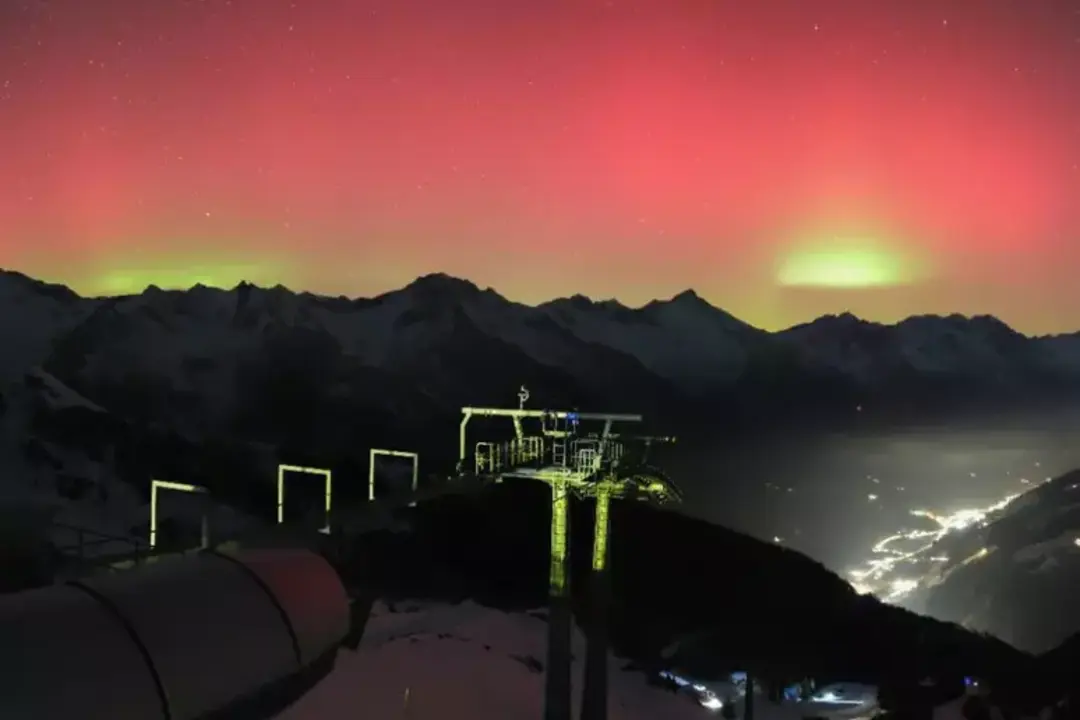
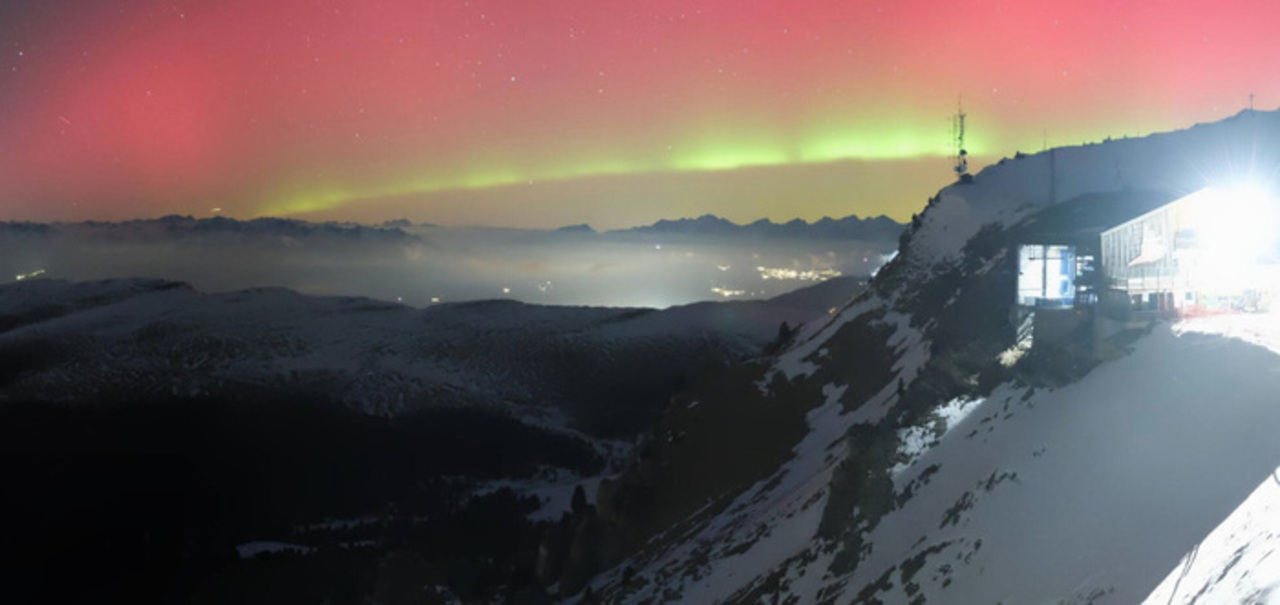
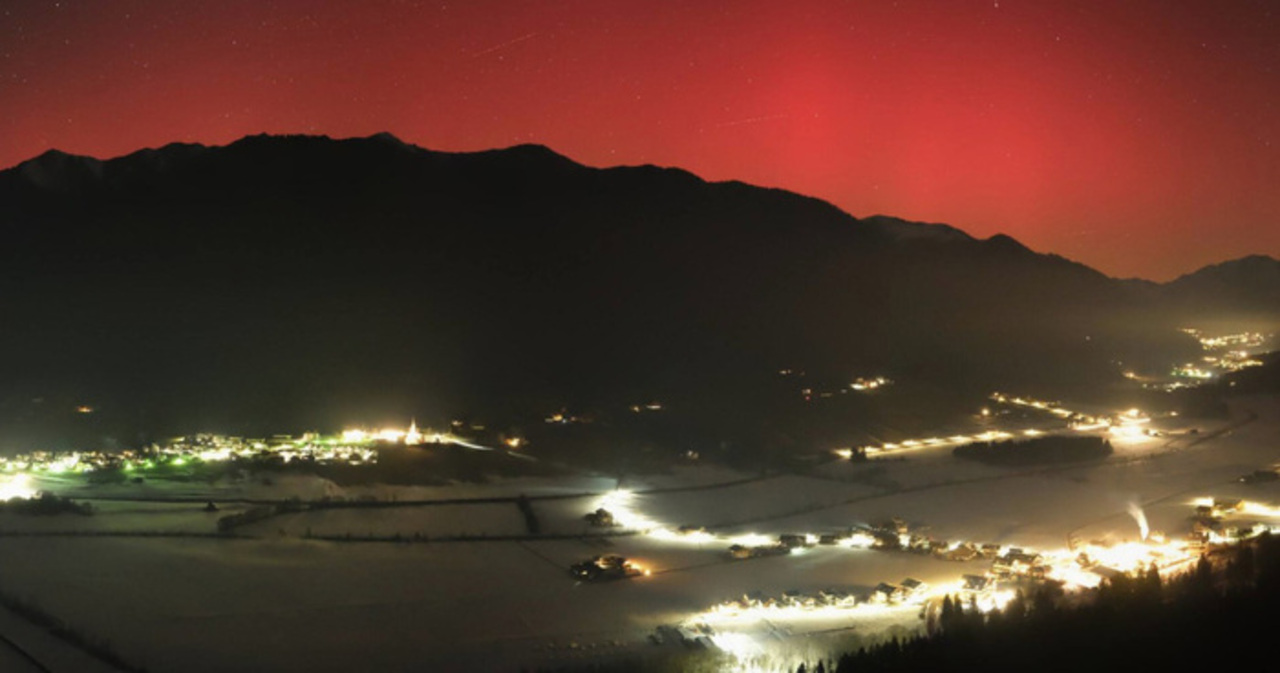
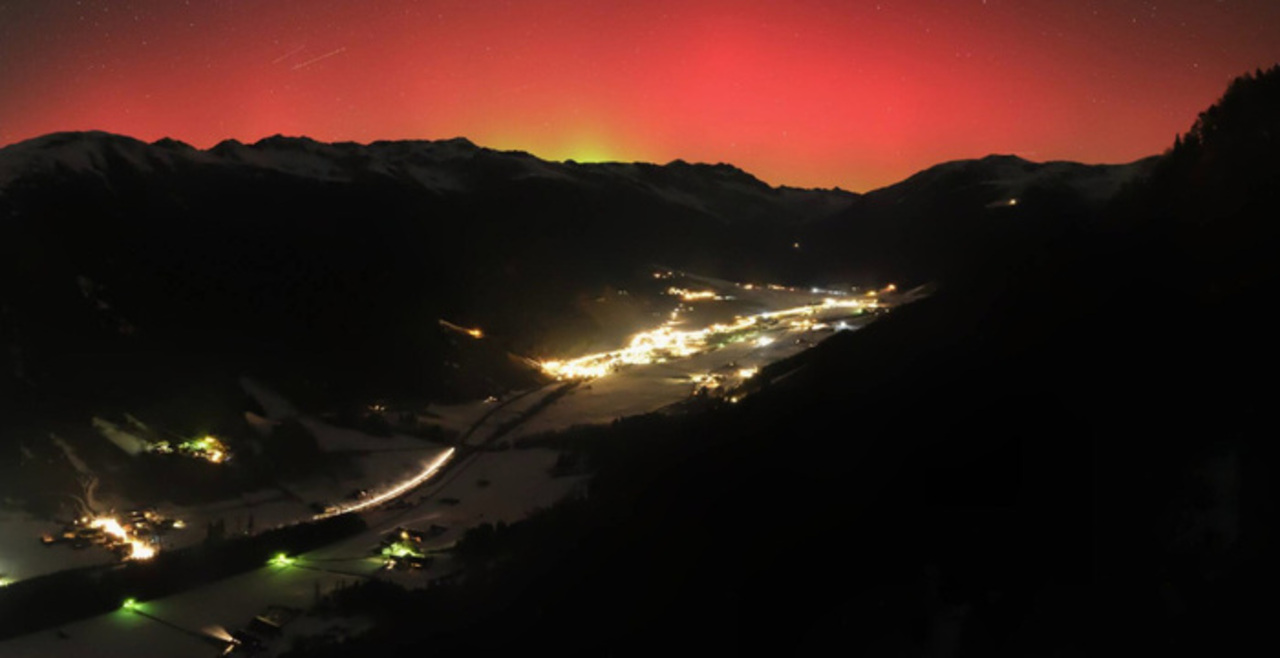
The Northern Lights have illuminated the skies over Italy's Dolomite mountains in an extremely rare and dramatic display.
The phenomenon also known as the Aurora Borealis, caused by sun particles reacting with the Earth's atmosphere, is normally restricted to northern climes but a recent unusually large burst from the Sun has brought the spectacle much farther south.
The typical shimmering colors of this phenomenon, so rare at Italian latitudes, can be admired in the shots of Italian astrophotography veteran Alessandra Masi, whose works have been selected several times by NASA as Photo of the Day (APOD).
"I captured these images from the Belvedere del Roccolo di S.
Alipio, in the heart of the Dolomites," Masi, who took the photographs from Pieve di Cadore on the evening of January 19, told ANSA.
"A natural balcony overlooking the villages of central Cadore and the Marmarole, mountains recognized by UNESCO as a World Heritage Site.
I didn't expect to see the auroral colors and structures typical of the polar regions dancing above my head," commented the astrophotographer, who brings a great passion for the area to her work, "in a spectacle as rare as it is unforgettable." The aurora phenomenon captured over the Dolomites was caused by a severe G4-class geomagnetic storm that began on January 19 and is still ongoing.
It occurs when electrically charged particles are ejected from the Sun at high speeds, for example through the coronal mass ejection (CME) that occurred in recent days in conjunction with a powerful X-ray solar flare.
When they reach Earth, the particles interact with the magnetic field, which channels them towards the poles, and excite the atoms that make up the atmosphere, which are the ones that then emit the characteristic red, green and blue lights.
ALL RIGHTS RESERVED © Copyright ANSA