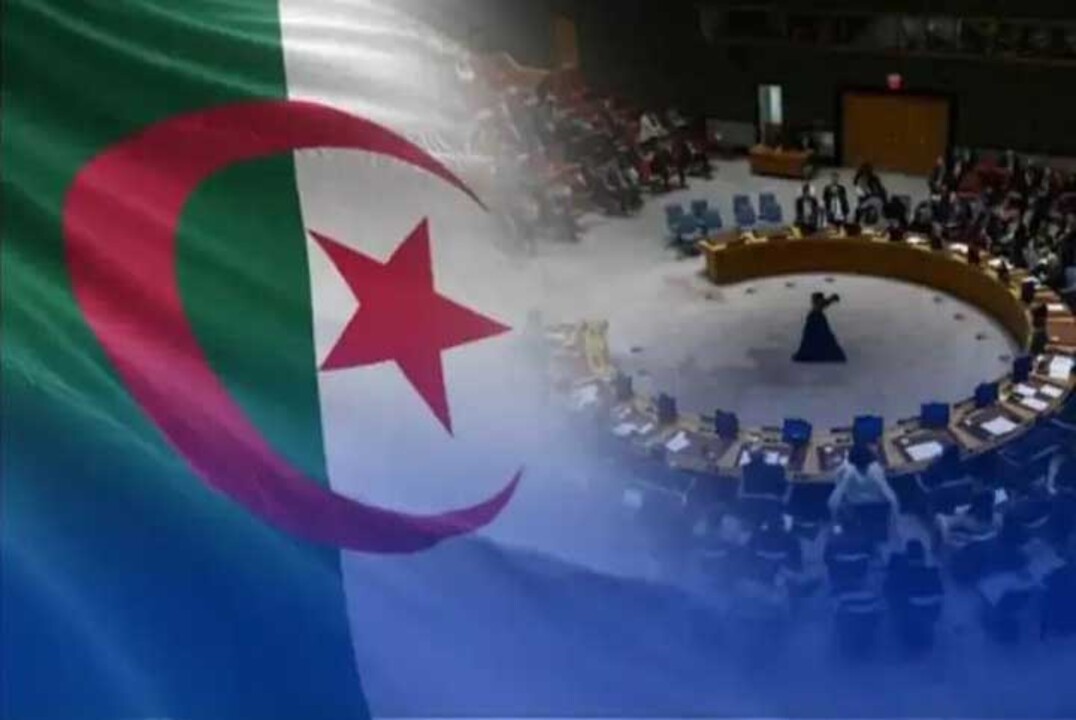
ALGIERS - During its rotating presidency of the United Nations Security Council (UNSC), Algeria reaffirmed its key role on the world stage, once again demonstrating its leadership in championing just causes, promoting peace and advancing global discussions toward a better world.
In line with the instructions of the President of the Republic, Abdelmadjid Tebboune, Algeria took on the defense of just causes in Africa and the Arab world while also working to resolve other conflicts troubling regions worldwide.
Acting as both a non-permanent member of the Security Council and a member of the A3+ group, Algeria succeeded, through its persuasive diplomacy and consultation-based approach, in convening numerous emergency meetings on the situation in Palestine and other pressing conflicts, including those in Sudan, Yemen, Lebanon, Libya, Syria, the Democratic Republic of Congo, Haiti and Colombia. It also initiated unprecedented meetings aimed at envisioning a better world, free from the scourges and challenges threatening humanity.
On Palestine, Algeria successfully convened multiple emergency meetings within thirty days, focusing on the critical need to strengthen the ceasefire in the Gaza Strip, addressing challenges facing the United Nations Relief and Works Agency for Palestine Refugees (UNRWA), and examining the situation of children in the Palestinian enclave, each time helping to ease the suffering of the population and restore hope.
As for Libya, Algeria’s efforts proved highly productive, securing a "historic agreement" that enables the Libyan Investment Authority to reinvest frozen Libyan assets in international financial institutions, along with a decision requiring the Libya Sanctions Committee to keep Libyan authorities informed of all communications regarding frozen assets.
On the Syrian, Yemeni, Sudanese, and Lebanese issues, the Algerian delegation succeeded, through its considerable influence, in persuading Security Council members of the importance of supporting political processes initiated by the peoples of these countries, aiming to usher in a new era free from foreign interference.
In its continued commitment to advancing peace worldwide, Algeria organized meetings and consultations within the A3+ group framework on the situations in Colombia, the DRC, and Haiti, consistently emphasizing the importance of prioritizing diplomatic channels and dialogue to defuse tensions.
Alongside its peace efforts, Algeria, a voice listened to and respected by its peers, launched unprecedented meetings on key topics directly addressing the challenges facing its immediate geographical region (Africa and the Arab world), including the fight against terrorism, strengthening UN-Arab League cooperation, and reforming the current international system.
Highly anticipated by the international community given Algeria’s experience in this area, the high-level UN Security Council meeting on combating terrorism in Africa, chaired by the Minister of State, Minister of Foreign Affairs, National Community Abroad and African Affairs, Ahmed Attaf, enabled attending ministerial delegations to learn about Algeria’s approach, which emphasizes the need to address both the symptoms of terrorism and its root causes, along with the interconnected aspects of development and security.
The Algerian approach received unanimous praise from the African ministers participating in the meeting, who thanked President Tebboune for his efforts and his effective role in coordinating continental strategies in the fight against this scourge.
Regarding the strengthening of cooperation between the Arab League and the UN’s executive body, the meeting also chaired by Attaf highlighted the urgent need to bolster and enhance Arab and UN diplomatic efforts to promote peace, security, and prosperity in the Arab region.
The meeting also underscored the negative consequences of excluding this issue from the regional peace equation, which would only worsen tensions and crises, noting that the international system also needs this complementary relationship, which represents the very essence of multilateralism and one of its main pillars.