ZAGREB, 16 Dec (Hina) - Croatia's Parliament passed the Energy Efficiency in Buildings Act, aligned with the new EU directive on building energy performance, aiming for all buildings to reach zero emissions by 2050.
Buildings in the EU account for 40% of energy use and 36% of greenhouse gas emissions, with heating, cooling, and hot water representing 80% of household energy consumption.
Under the plan, all new buildings must be zero-emission from 2030, while public buildings must be zero-emission two years earlier, from 2028. EU member states must renovate 16% of the worst-performing non-residential buildings by 2030 and 26% by 2033. Energy certificates will be valid for a maximum of 10 years.
Major problem - poor building maintenance
Irena Križ Šelendić, Director General of the Directorate for Energy Efficiency in the Buildings Sector, EU Projects and Programmes, explained that Croatia's first thermal insulation regulations date back to 1970, meaning many buildings in the country have poor or insufficient insulation.
The 2020 earthquakes worsened the situation, creating additional obligations for reconstruction and improving seismic resilience.
The new Building Management and Maintenance Act, along with EU and national funding, is expected to accelerate renovations.
37% of residential buildings worst in terms of energy efficiency
In 2023, Croatia had 966,487 residential buildings, of which 37% are among the worst in terms of energy efficiency. Most buildings fall into energy class C (34%) or D (17%), while only 39% are in higher classes (A+, A, B). Only 9% of existing buildings have energy certificates.
Funding for renovations
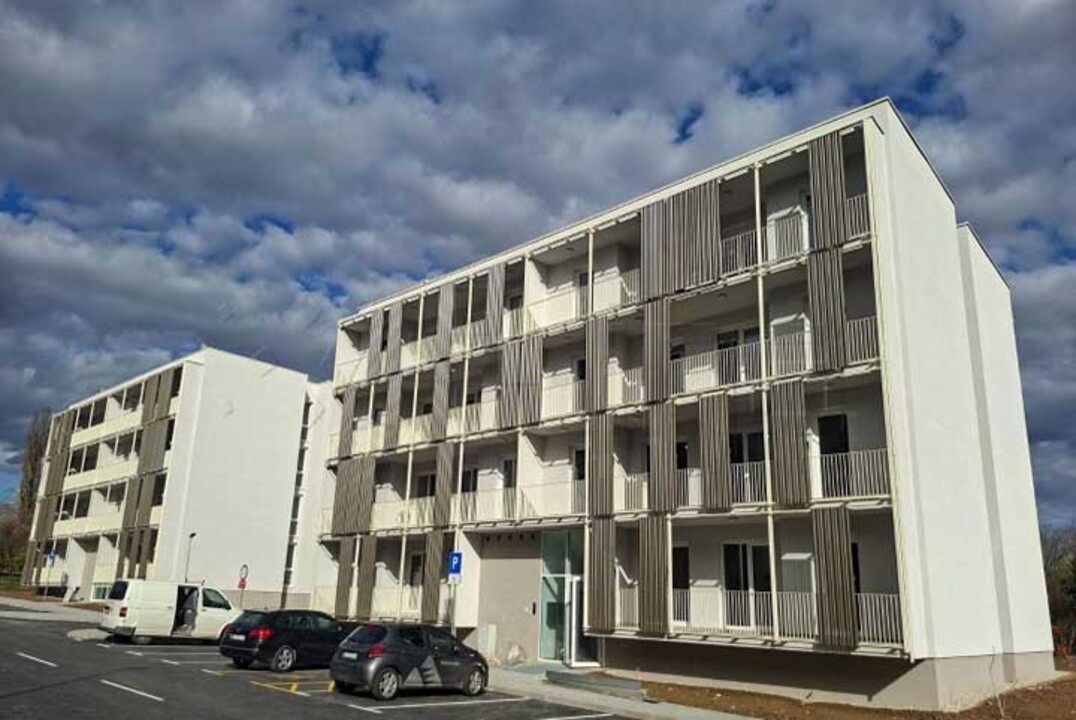
Over €2 billion is allocated from the National Recovery and Resilience Plan for building renovations, including €525 million for undamaged buildings and €1.52 billion for earthquake-damaged buildings. The European Regional Development Fund provides an additional €274 million, with further support through financial instruments like ESIF loans.
Energy renovations of family homes are funded through the Environmental Protection and Energy Efficiency Fund, with €120 million for general renovations and €25 million for households at risk of energy poverty. The 2026-2032 Social Fund for Climate Policy allocates €553.5 million to assist vulnerable citizens. The National Housing Policy Plan dedicates €400 million to energy-efficient renovations for affordable housing.
HDZ MEP Nikolina Brnjac emphasised the importance of investing in this type of renovation. She pointed out that affordable housing should not rely solely on new construction; investment must also focus on the energy renovation of existing buildings.
Consensus among co-owners needed
Until now, Croatia has relied on grants for energy renovations, but this is set to change.
"There is growing pressure to shift from grants to financial instruments, keeping grants only for households at risk of energy poverty. Under the Competitiveness and Cohesion Programme 2021-2027, multi-apartment building renovations will be co-financed via financial instruments, with the possibility of partial principal write-off depending on projected energy savings," explained Križ Šelendić.
MEP Gordan Bosanac (We Can!) argued that Croatia should resist pressure to abandon grants, at least under the current multiannual financial framework. "By year-end, we have the opportunity to redirect unused cohesion funds to energy renovations and affordable housing via grants. We cannot place the cost of the green transition on citizens who have lower incomes than citizens in other EU countries," he said.
High investment costs will be the biggest challenge, especially for multi-apartment buildings where consensus is needed not only on undertaking renovations but also on their scope, noted Dean Smolar, Executive Director of the Croatian Green Building Council.
"The benefits are numerous: lower heating and cooling costs, reduced exposure to price increases, higher long-term market value, improved usability, better resilience to extreme weather caused by climate change, enhanced quality of life and health for residents, and more attractive and maintainable buildings and neighbourhoods," Smolar added.
A key role in renovations is played by co-owner representatives, who coordinate maintenance and investment decisions.
National Building Renovation Plan
Croatia will submit its draft National Building Renovation Plan to the European Commission by 31 December 2025, and the final plan by 31 December 2026. The plan will guide the transformation of residential and non-residential buildings to high energy efficiency and zero-emission standards by 2050.