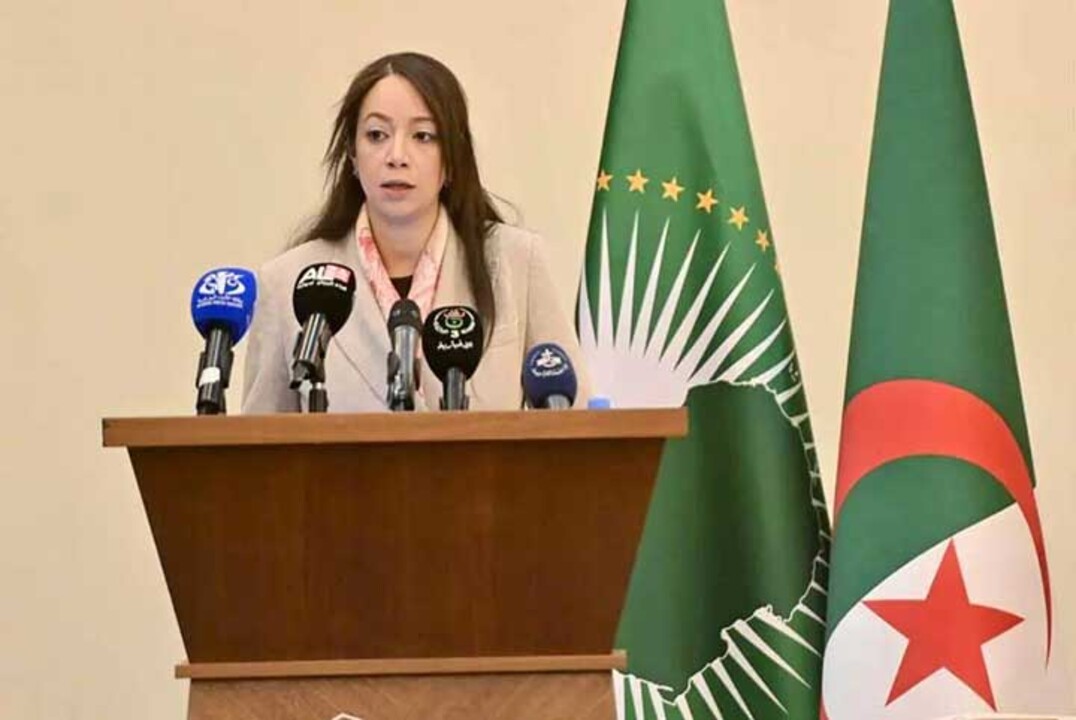
ALGIERS- Secretary of State to the Minister of Foreign Affairs, in charge of African Affairs, Salma Bakhta Mansouri, emphasized Algeria's commitment to its African and historical obligations in the fight against terrorism and its willingness to continue making an active contribution to this collective dynamic to advance peace, stability, and sustainable development on the continent.
Mansouri, in a speech delivered during the opening of the Expert Consultative Workshop on the draft Strategic Plan of Action on Countering Terrorism, held on Monday, in Algiers, stated that "terrorism is no longer a temporary phenomenon or confined to specific geographical areas, but has evolved into a cross-border threat, adaptable and fueled by complex interactions that combine transnational organized crime, illicit economies, and illegal trafficking of resources, alongside the increasing exploitation of modern technologies."
During the workshop, which saw the participation of a select group of experts and specialists from various African regions and institutions, the Secretary of State elaborated that "Africa now bears the brunt of this threat, with over 70% of global terrorism victims, in a structural crisis that undermines state authority, hinders development pathways, and fuels cycles of instability."
Building on this assessment, Mansouri stated that during the Extraordinary African Union Summit on Terrorism and Unconstitutional Changes of Government in Africa held in Malabo in 2022, African heads of state and government "urged the review and strengthening of the continental response to terrorism, as part of a process that falls within the mandate entrusted to President of the Republic Abdelmadjid Tebboune, in his capacity as the African Union’s lead figure for Countering Terrorism and Prevention of Violent Extremism, aiming to mobilize political will at the highest levels and to consolidate African ownership of counterterrorism strategies."
Given the nature of these challenges and the interconnection of their dimensions, the Secretary of State said that "this highlights the need for Africa to strengthen its presence and role as a strategic actor in the international counterterrorism effort through a more coherent and integrated continental approach, based on clarity of vision and the consolidation of strategic sovereignty."
Mansouri called for the activation of the proposed continental mechanisms, foremost among them the Special Fund for Counter-Terrorism, the African Arrest Warrant, and the African list of terrorist entities, alongside the operationalization of the Sub-Committee of the Peace and Security Council responsible for terrorism. She pointed out that strengthening the human, technical, and financial capacities of Africa’s specialized mechanisms, particularly the African Standby Force (ASF), the African Union Mechanism for Police Cooperation "AFRIPOL", the African Intelligence and Security Committee, and the African Center for Counter-Terrorism, is "a crucial element in ensuring the effectiveness of any collective response."
For his part, Idriss Mounir Lallali, Acting Director of the African Union Counter Terrorism Centre (AUCTC), said that this workshop, organized by the AUCTC under the aegis of the African Union Commission, represents a key platform for exchanging expertise and strengthening cooperation among African Union member states. He emphasized that addressing terrorism and violent extremism requires continuous coordination between national, continental, and international institutions.
The speaker further emphasized that Algeria plays a "pivotal" role in the African Union’s efforts to counter terrorism and prevent violent extremism. He explained that hosting the African Union Counter Terrorism Centre in Algiers, along with Algeria’s active participation in African and international mechanisms, reflects the country’s steadfast commitment to peace and security in the continent.
Lallali pointed out that Algeria’s contribution to the establishment of legal and procedural tools for counter-terrorism, such as the 1999 Convention, the 2002 Draft Continental Strategic Action Plan, and the 2004 Additional Protocol, makes the country a central pillar of the collective African vision.