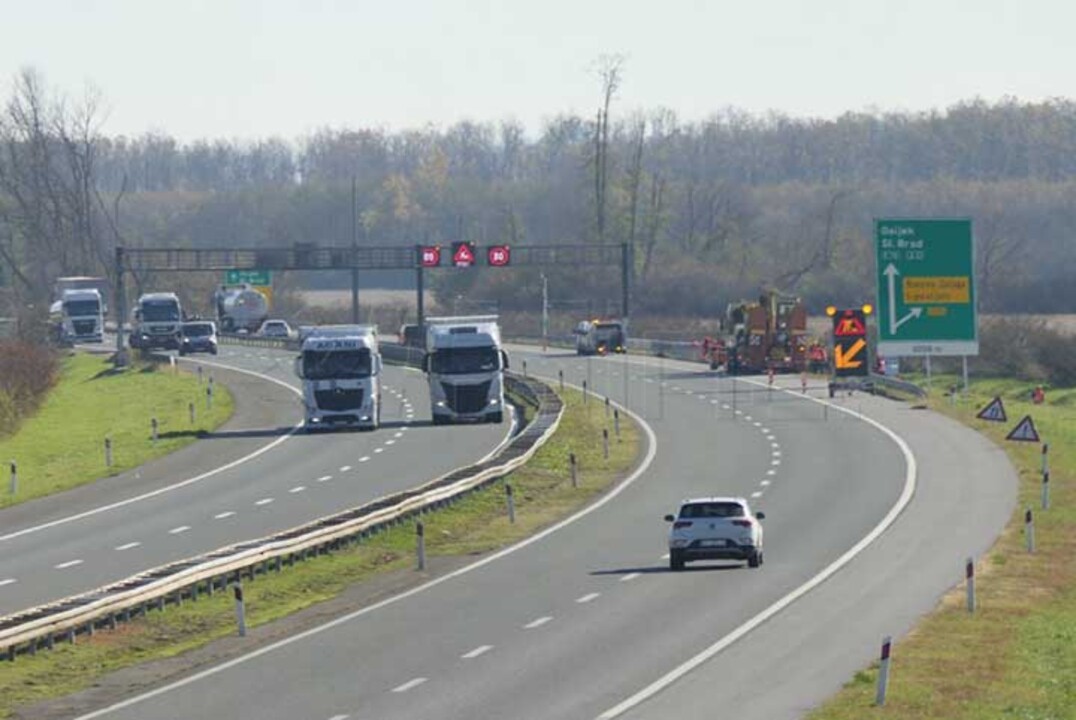
ZAGREB, 10 Dec (Hina) - Addressing Parliament, Ministry of Transport State Secretary Tomislav Mihotić emphasised that the new electronic tolling system, which will begin operating on 1 March 2027, will significantly improve traffic flow.
He also explained what will happen if the system crashes or stops functioning.
In such a case, the old system will be reinstated temporarily to bridge the situation, he replied to Peđa Mišić (DP), stressing that for some time after the new system is introduced, toll booths will still physically remain at motorway entrances, although they will not have staff or active barriers.
Presenting to the Parliament the law on the new tolling system, which introduces free-flow tolling without vehicle stopping, Mihotić dismissed concerns that tourists arriving in Croatia would not understand the system or be able to use it normally.
Everyone will be informed about what awaits them in Croatia, he told Josip Borić (HDZ), explaining that tourists will be able to register for the tolling system before entering the country.
The new tolling system relies on two technologies: the ETC device in the vehicle, and automatic registration plate recognition via cameras.
The Electronic Toll Collection System (ETC) will include registration of the registration plate and a valid means of payment -- this will be mandatory for light vehicles up to 3.5 tonnes. Heavy vehicles will have to use both ETC and automatic plate recognition.
Registration for ETC will be possible through a national online sales portal, a mobile app, other digital services, and designated fast-entry lanes. It will also be possible at motorway operator offices or third-party sales points that have agreements with tolling entities.
The state secretary assured that all necessary work will be completed on time.
Mihotić also explained what will happen to the employees currently working at toll booths -- an issue raised by Dubravka Pehar Lipovac (DP).
He said that the tolling system currently employs 972 workers, of whom 731 work directly as cashiers. With the new system, 717 employees will be needed, meaning a reduction of 255 positions. Some workers will leave through natural attrition, others through severance packages -- all agreed upon with the unions, he said.
Paus: Nothing new for Istria regarding toll prices
He also responded to Dalibor Paus (IDS), who argued that the new law brings no improvements for Istria regarding toll costs. "In other words, the new law applies to everyone except those who have lived with this injustice for decades," said Paus, illustrating this with two road sections: The Sveti Rok – Rovanjska section, 37 km long, which costs €2.30; and the Učka Tunnel – Matulji section, 17 km long, which costs €4.10.
"That means it's twice as expensive for half the distance," he said.
Users of the Učka Tunnel who use it frequently receive significant discounts, bringing the price closer to that of other motorway sections, Mihotić responded.
Matej Mostarac (SDP) questioned the economic efficiency of the new tolling system and asked why Croatia abandoned the plan for electronic vignettes, which are more convenient for citizens.
The state secretary explained that vignettes apply only to light vehicles. In EU countries, tolls for heavy vehicles are charged per kilometre. The EU's goal is to shift from time-based to distance-based tolling -- and this is the system Croatia is implementing, he said.
"Why didn't Croatia follow Austria, which allows anonymous ETC use? And why, if the state aims to charge for every kilometre, are there free tunnels, such as Sveti Ilija?", asked Ante Kujundžić (Bridge).
He argued that the tunnel should have been free for the local population, while tourists should have been charged during the tourist season, and that the revenue should be used for tunnel maintenance.