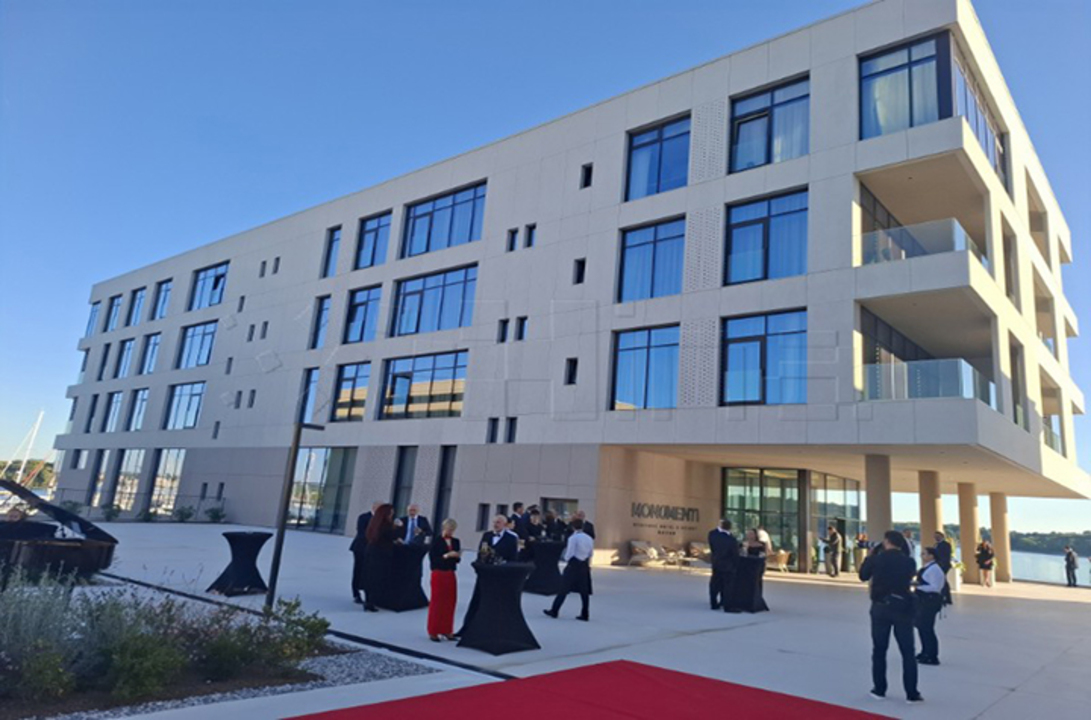
ZAGREB, 3 Dec (Hina) - Croatian hoteliers recorded a strong 2025 season with high occupancy rates, but rising costs, especially for labour and food, outpaced revenue growth and are squeezing investment capacity and competitiveness, speakers said at the annual hoteliers' congress.
The two-day event, organised by the Croatian Hotel Employers' Association (UPUHH) and the Croatian Tourism Association (HUT) in partnership with the IstraTech company, focuses on current sector trends and expectations for 2026.
UPUHH president and HUT director Veljko Ostojić said 2025 had been a year of market stabilisation without major surprises, but the sector continued to struggle with pronounced seasonality. Hotels and campsites have mitigated this by increasing occupancy and extending operating days.
He said rising costs were shaping pricing, noting that labour costs in hospitality increased by more than 50% between 2020 and 2025, bringing wages close to European and Mediterranean averages. Profitability, however, is not rising at the same pace, limiting funds for essential investment. Labour costs in Croatia rose by over 51% in that period, compared with 37% in the EU and Mediterranean. Food prices rose by 4.9% in Croatia in the first nine months of 2025, compared with 2.8% in the EU.
Ostojić said the sector could face lower profitability in 2026 if the trend continues. The number of hotel beds increased slightly in 2025, but Croatia still has an unsustainable accommodation structure: of nearly two million beds nationwide, about 1.5 million are in short-term rentals.
He highlighted the long-term value of hotel investments, saying an analysis of 20 major projects over the past decade showed that they generate value equal to the investment amount within eight years, and that companies repay the full value of investments to the state through fiscal and parafiscal charges within 12 years. Many countries support hotel investment, he said, and Croatia should offer incentives if it wants faster growth in hotel capacity.
In the first ten months of 2025, accommodation revenue grew 8.2% year on year, but EBITDA margins fell from 28.2% in 2024 to an expected 26.6% in 2025.
Tourism and Sports Minister Tonči Glavina congratulated the sector on a successful year, with 2% more tourist arrivals and 1% more overnight stays than in 2024. He stressed the importance of the pre- and post-season, supported mainly by hotels and campsites.
He warned that 2026 will depend heavily on price competitiveness: "If price increases are not matched by higher quality, there will need to be corrections, including price reductions. Otherwise, I am fairly sure we will not repeat the record year of 2025." He added that all indicators suggest price will again be the main factor for travellers in 2026.
Glavina and Croatian National Tourist Board (HTZ) director Kristjan Staničić announced a major increase in promotion and marketing funds for 2026. HTZ will receive around 40% more state funding than in 2025, with a 2026 budget of about €53 million -- €42 million for HTZ operations and the rest for local tourism projects. They plan significantly more advertising in the pre- and post-season.
Awards for hotel managers
On the opening day of the congress, traditional awards were presented to the best hotel managers. Two new awards were introduced: Damjan Dumić of Arba Resort Valamar Collection received the award for excellence in hotel openings, and Mario Matković of Hilton Imperial Dubrovnik received the award for outstanding long-term excellence and leadership in five-star hotels.
Other winners included Davor Jančić of Hotel Supetar (best small/boutique hotel manager), Nuša Korotaj of Terme Sveti Martin (best four-star hotel manager) and Matija Bošković of Marea Suites Valamar Collection (best five-star hotel manager).