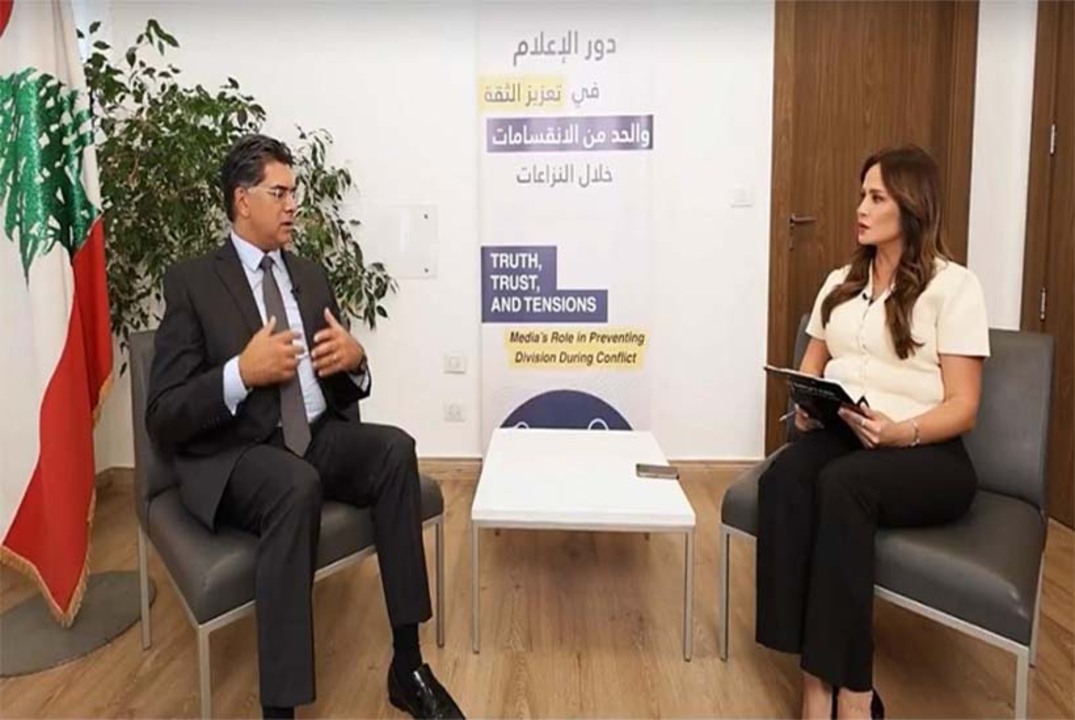
NNA - Minister of Information Paul Morcos said the new Media Law represents a major step toward modernizing legislation and reforming Lebanon’s media sector, noting that the law had remained under discussion in parliamentary committees for years before finally being approved and published in the Official Gazette.
Speaking to Sputnik Radio, Morcos said the law was among the key files followed by the Ministry of Information, saying that it was prepared in cooperation with local and international experts, including UNESCO as well as Lebanese media and human rights organizations.
He explained that the law introduces a legal framework for electronic news websites, which had previously not been covered by legislation. He stressed that websites will not require prior licensing, but their owners will be required to submit a declaration to the Independent National Media Authority and comply with professional requirements, including having an established website, an editor-in-chief and guaranteeing the right of reply.
Morcos said the law also establishes, for the first time, an Independent National Media Authority, provides a legal definition of a media professional and includes provisions aimed at combating hate speech.
He stressed that the law’s general approach is to abolish custodial penalties, replacing imprisonment with fines.
Morcos also said Lebanon had advanced by 25 positions among Asian and Arab countries in the World Press Freedom Index published by Reporters Without Borders during the current presidential term.
He noted that the law had received a positive response from international and local bodies, including UNESCO, the European Union, the International Organisation of La Francophonie and Reporters Without Borders, as well as a number of Lebanese organizations concerned with media and freedoms.
"Improving Lebanon’s ranking has a positive impact on the media sector and opens the door to further training, cooperation and international partnerships," Morcos said, stressing that Lebanon has yet to attain the global position it deserves given its media expertise and the role of Lebanese professionals in establishing and managing regional and international media institutions.
On efforts to combat hate speech, Morcos warned that the repercussions of war, along with psychological, social and economic pressures, could increase tensions within society.
He stressed that communication platforms should not become "fronts" that undermine the dignity, freedoms, religious beliefs or privacy of others. He clarified that the Ministry of Information has no legal authority over social media platforms, which fall under the jurisdiction of the judiciary.
Journalist Safety
Addressing the safety of journalists, Morcos said the ministry had submitted memoranda to the UN Human Rights Council, UNESCO, the European Union delegation, a number of ambassadors and international bodies, in cooperation with the Ministry of Foreign Affairs and Emigrants and the International Humanitarian Law Committee.
He said Lebanon had also received a fact-finding mission from the Office of the UN High Commissioner for Human Rights and was awaiting its findings, stressing that the authorities would continue documenting and recording attacks against journalists.
"The assassination of journalists, in addition to being unacceptable, is something we will not accept and will not become accustomed to," Morcos said, describing attacks on journalists as violations of international conventions, the four Geneva Conventions of 1949 and their protocols.
He further said Israeli occupation forces restrict the movement of Lebanese journalists while they cover events, exposing them to additional risks.