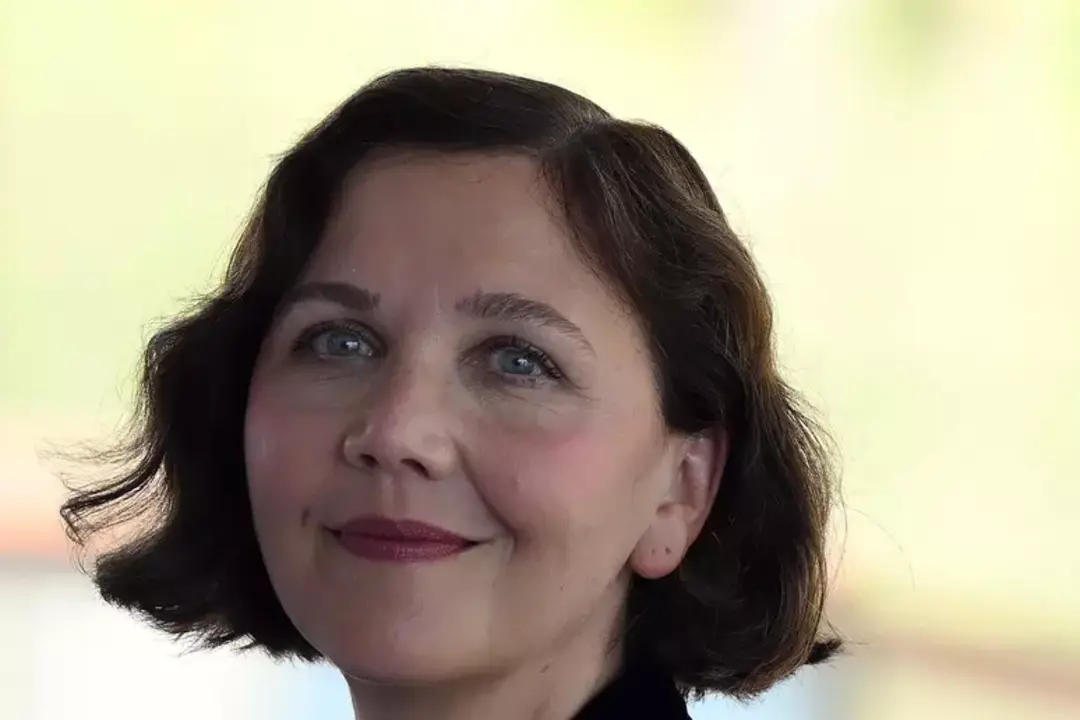
The under-representation of female directors in Venice and at other international film festivals is due to a "systemic issue", jury chair Maggie Gyllenhaal told a press conference before the 83rd edition of the world's oldest film fest Wednesday, noting that only two women are up for the Golden Lion this year compared to six last year.
"I think it's finally become clear that men make better films than women," Gyllenhaal initially responded with a quip that got the audience laughing when asked about the lack of female directorial talent on show.
"I'll answer seriously, there's a systemic problem," Gyllenhaal added during the press conference with festival director Alberto Barbera and the chairs of this year's other juries.
"I think it's much more difficult for women than men to get funding for their films.
Furthermore, it's possible that the themes women tackle, having had a different life experience, aren't always considered high-level art.
"But who decides what's good? Who decides what has value? "I must also say, sitting next to one of the people who make these decisions, that there are a lot of women on this panel and that my jury also includes incredible female directors.
"In any case, it's a question I ask myself, too, and it's a legitimate question." When asked if Barbera thinks it's true that female filmmakers are penalized for the themes they tackle, the director clarified that "in the very long selection process, there's no bias regarding form or content; the only criterion is the quality of the film." For Gyllenhaal, however, "there's a lot of confusion about what's being valued.
"I think it's still been a short time since women had the opportunity to make films, and it will take time to get used to the fact that many of them make them very differently from men." Among the other questions for the Venice 83 jury president was one about a festival taking place in the midst of a period of conflict.
"I'll talk about it more in depth tonight (on opening night, ed.), but we could ask ourselves: 'How is it possible that we're talking about cinema right now, when the world is in a state of emergency?' "For me, the answer has to do with empathy. I believe cinema offers the opportunity to find empathy within ourselves.
"Personally, I don't think there's a topic, for any filmmaker, that doesn't deserve to be told.
"I believe we can challenge ourselves by listening to stories about the most corrupt and perverse people, because it offers us the opportunity to feel empathy for them and even to reflect on how we might have a dark side, a perversion, a corruption within ourselves, and try to fight it, as much as we can.
Gyllenhaal said she believes that "if films truly offer an honest look at other people's experiences, then they are fundamentally and inevitably political, among many other things." As for her career, "I think I've probably always been a director, but I didn't see any women around me who were. There were some, of course, but I just wasn't cool enough to know Agnès Varda when I was a 16-year-old living in California," observes the actress and filmmaker, who directed The Dark Daughter, which premiered in 2021 at Venice, and this year's Bride!.
"The people I admired were actresses who had a point of view, who had an artistic impact on the film they were making, who were co-narrators with their directors, and there were several, like Gena Rowlands with her husband (John) Cassavetes.
"I'm thinking of Ingrid Bergman, of Ellen Burstyn, who is the protagonist of the short film I shot (debuting on the Lido in the next few days, ed.).
"In reality, however, I then realized that acting wasn't the right job for me." Even when making a beloved film like cult S&M classic Secretary, she said, "I felt like I was pushing a boundary that I didn't know how much I could express."
ALL RIGHTS RESERVED © Copyright ANSA