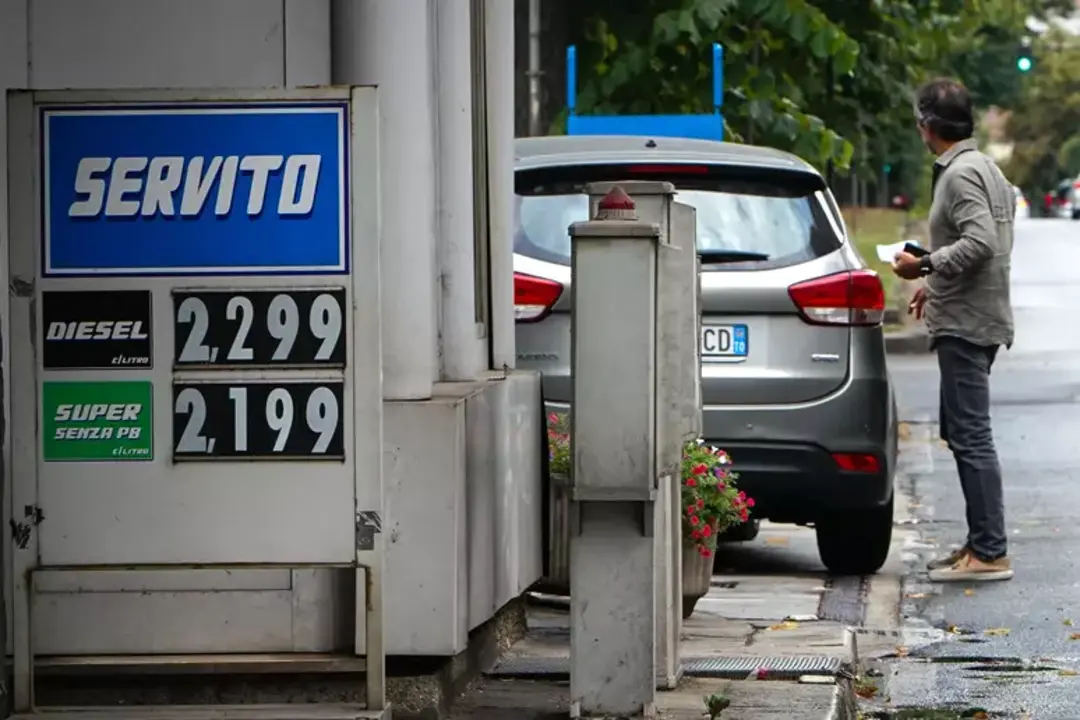
Fuel prices are still on the rise in Italy and the government is set to meet this evening to extend a 17-cent cut on diesel duty and line up further moves to help struggling households with the hikes sparked by the Iran war.
The Ministry of Business and Made in Italy announced that, based on the latest data collected by the Transport Ministry (MIMIT) Fuel Price Observatory, today the average self-service fuel price along the national road network is €2,017 per liter for gasoline (yesterday's price was €2,015) and €2,137 per liter for diesel (yesterday's price was €2,136).
On the motorway network, however, the average self-service price is €2,092 per liter for gasoline (yesterday's price was €2,091) and €2,208 per liter for diesel (yesterday's price was €2,207).
Retail group Confesercenti, meanwhile, said there had been a €1.8 billion increase in fuel costs for Italians on holiday this summer.
This summer, it said, filling up the tank cost Italians up to €1.8 billion more than in July and August of last year.
This increase weighed on family budgets, especially during the two central holiday months, impacting mobility and tourism consumption.
This is the estimate from the Confesercenti Economic Office, based on MIMIT data for comparable consumption and the now nearly definitive August findings: overall, in July and August 2026, motorists spent 21% more on fuel than in the same months in 2025.
In the summer of 2025, according to the retailers' statement, gasoline stood at around €1.70 per liter and diesel at €1.63.
In August 2026, the average will hover around €2 for gasoline and above that threshold for diesel.
The Mimit survey of August 23, on the road network in self-service mode, indicates €2,010 per liter for gasoline and €2,130 for diesel.
Translated into a 50-liter tank, this equates to about €14 more than a year ago for a gasoline-powered car and over €20 more for a diesel.
Without government intervention, the statement emphasizes, the bill for motorists would have been even heavier.
In July and August alone, the excise duty cut reduced fuel costs by approximately €300 million.
This benefit was primarily concentrated on diesel: for much of July, the reduction was not effective, and when it was reintroduced on July 28th, it only affected diesel, with a discount of 17 cents per liter.
Without the measure, a 50-liter tank would have cost approximately €8.50 more.
Gasoline, however, has never been included in the scope of the intervention since the beginning of July. The association is therefore "definitely benefiting" from the prospect of a further extension.
"Without new resources, the 17 cents would once again weigh entirely on the price at the pump, right at the height of the counter-exodus and on the eve of September, a month when at least 15 million tourists are expected and which continues to be an important phase of the season." "The high fuel prices can no longer be addressed with short-term and limited-effective measures," commented Confesercenti President Nico Gronchi.
Unfortunately, a continuation of international tensions, and thus a period of high energy price volatility, cannot be ruled out.
The levels reached today at the pump for gasoline and diesel already risk penalizing the September tourist season and, more importantly, spreading throughout the economy, fueling new inflationary pressures—an area requiring particular attention this fall.
This requires targeted and structural intervention on fuel and energy taxation, capable of mitigating shocks and preventing price increases from spreading like a chain reaction to businesses, households, and consumers.
ALL RIGHTS RESERVED © Copyright ANSA