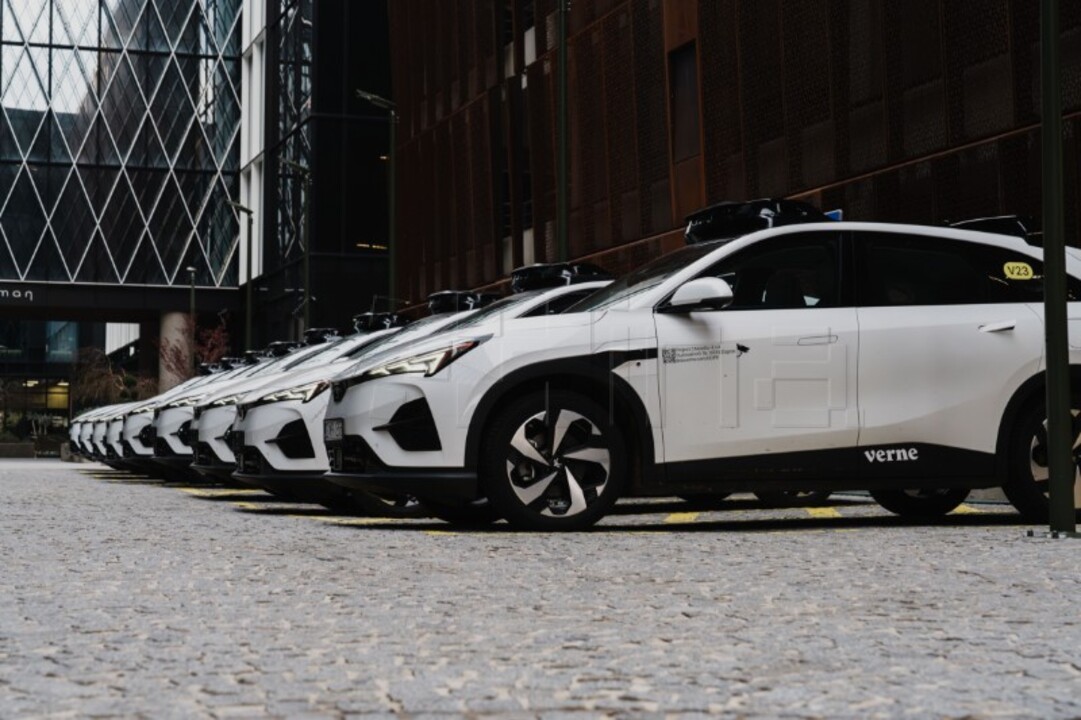
ZAGREB, 7 May (Hina) - Verne says Zagreb has become the first city in Europe to introduce a robotaxi service, with the Croatian company spending the past month familiarising residents with the technology, according to a report by AFP, whose journalists were among the first to test the service.
In partnership with Uber and using autonomous driving technology developed by Pony.ai, Verne has operated a fleet of 10 automated vehicles for a selected group of customers in the Croatian capital since 8 April.
While similar services have been available in China and the United States for several years, companies are still competing to bring autonomous taxi services to European roads.
The service by the company founded by Mate Rimac, Marko Pejković and Adriano Mudri is designed to be fully autonomous, although a “human operator” will initially remain on board in case intervention is required.
During AFP’s trial of the service, which Verne says is currently used by around 300 people, operator Deni Link did not need to intervene once.
The largely smooth ride was interrupted only when an oncoming vehicle veered into the wrong lane, forcing the car to brake sharply. “We apologise, we had to brake,” a calm female voice announced.
Despite often chaotic traffic and complex junctions in Croatia, AFP reported that Filip Cindrić, Verne’s head of operations in the country, said most journeys were completed “without any intervention”.
According to him, who accompanied AFP during the journey, 90% of passengers had given the service four or five stars, while no collisions had been reported over tens of thousands of kilometres driven.
Although the service was first announced in early April, the vehicles have rarely been seen on the streets. For now, they operate in the city centre, parts of Novi Zagreb and around the airport, Verne chief executive Marko Pejković told AFP. “The expansion is gradual, and each new zone is introduced only after detailed validation and once the system has proved reliable in real-world conditions,” he said.
According to the company, demand for the automated service, priced at €1.99 per ride, has been strong, with around 4,000 people currently on the waiting list. Pejković said the low introductory fare was aimed at attracting users and encouraging feedback, adding that prices were expected to rise as the service expanded.
The automated vehicles, which can be booked through Verne’s app, are equipped with multiple cameras, lasers and radar systems to help navigate city streets.
Verne, founded in 2019, said talks were under way in 11 cities across the European Union, the United Kingdom and the Middle East.
In Zagreb, the company aims to transition to fully autonomous operations by the end of the year, subject to regulatory approval.
With a further 30 cities under consideration, Cindrić said he was proud that Zagreb had become the first to make the technology operational. “If it were that simple, it would already exist in London or another major European city,” he said.