ZAGREB, 17 April (Hina) - The Diaries of Andrija Štampar, personal writings of a physician documenting the development of public health and the idea of accessible healthcare for all, are among three Croatian entries inscribed on UNESCO’s Memory of the World Register.
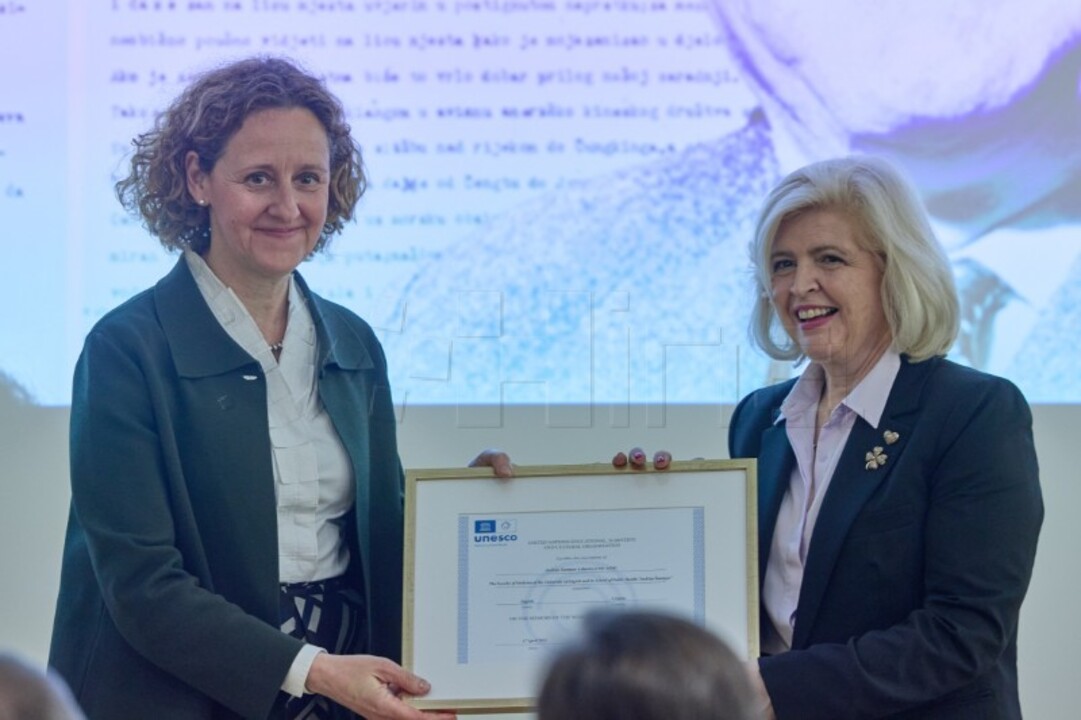
Culture and Media Minister Nina Obuljen Koržinek on Thursday presented UNESCO certificates marking the inscriptions.
Written between 1931 and 1939, Štampar’s diaries offer a historical account of the development of healthcare, as well as the reflections of a doctor who advocated universally accessible and free public healthcare and the improvement of living conditions for the most vulnerable.
The manuscript Vita Sanctorum Marini et Leonis, which Croatia inscribed on the register together with San Marino and Italy, recounts the life of St Martin and his journey from the Dalmatian coast to San Marino. The manuscript, dating from the 8th and 9th centuries, is kept at the National and University Library in Turin and holds an important place in the identity of the island of Rab.
Also inscribed were short animated films from the Zagreb School of Animated Film, comprising 414 titles produced between 1956 and 1979, held at the Croatian Film Archive of the Croatian State Archives. The international reputation of the school is also confirmed by the Academy Award won by the 1961 animated film Surogat by Dušan Vukotić.
“Each nomination process initiates special forms of cooperation among Croatian experts, who have the opportunity to deeply explore the values of our heritage and understand where we stand in relation to the world, other cultures and how valuable our heritage is,” said Minister Obuljen Koržinek.
Chair of the Croatian UNESCO Commission Zvonko Kusić said the Memory of the World programme was launched in 1992 to preserve documentary heritage and ensure its accessibility, stressing that it includes items of global significance.
Mirjana Kujundžić Tiljak, Director of the Andrija Štampar School of Public Health, said the purpose of today's gathering was not only to mark the recongition of three major Croatian entries but also to honour ideas, values and a legacy that transcends time and borders.
“These certificates are not only a confirmation of the value of individual heritage items, but also of the lasting value of knowledge, art, solidarity, and care for people,” she said, adding that staff of the School of Public Health and the University of Zagreb Medical School are extremely proud that Štampar’s diaries have been inscribed on the Memory of the World Register.
Certificates were presented to representatives of scientific, cultural and educational institutions, as well as of local government units and public institutions.
Srđan Baković
Izvršni urednik
Hrvatska izvještajna novinska agencija (HINA)